
Last updated November 15, 2026
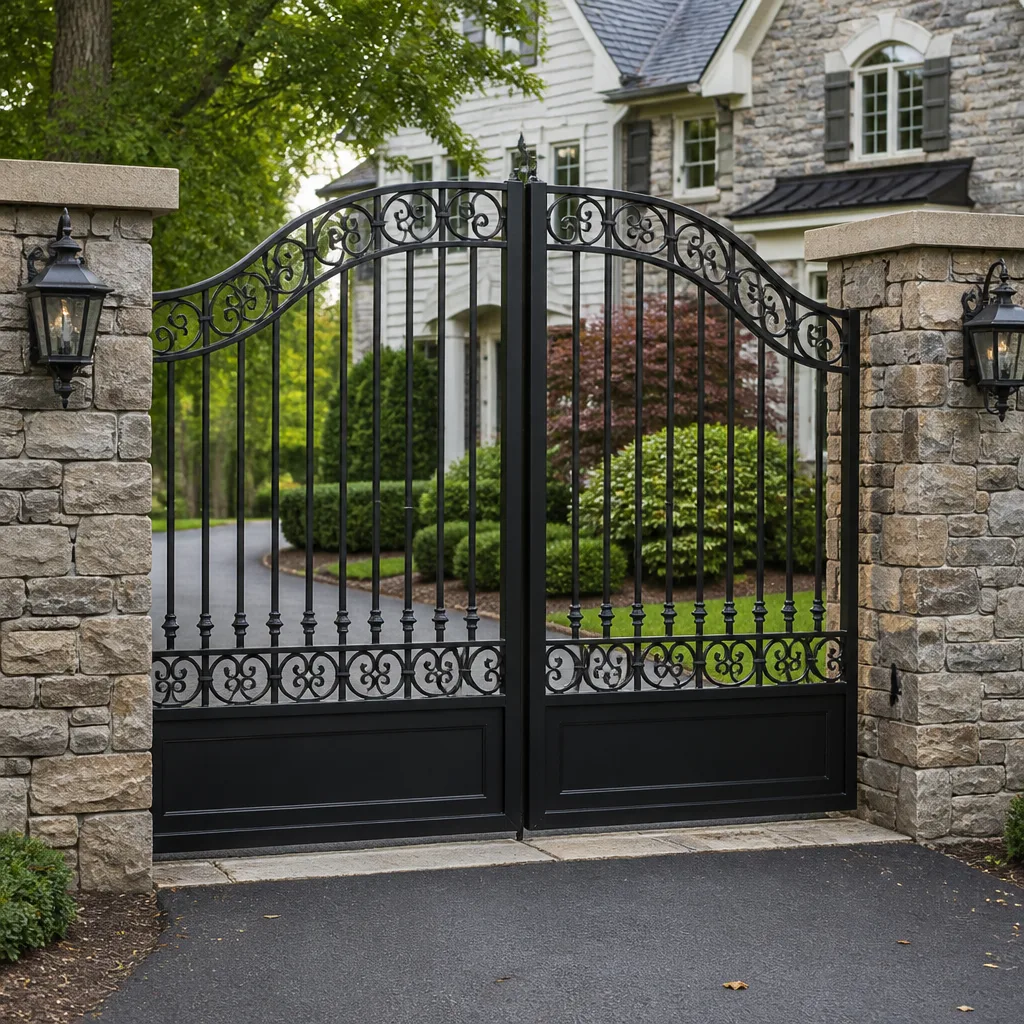 Wrought iron
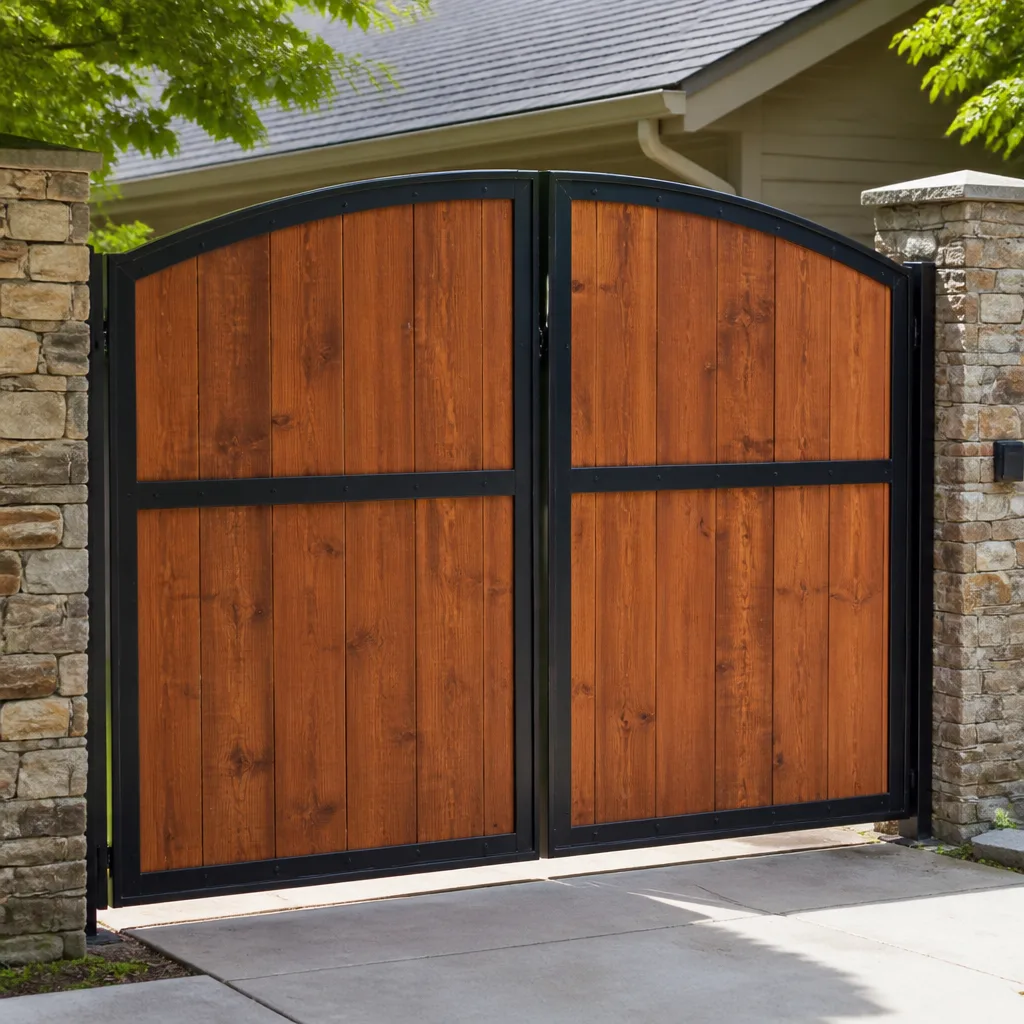 Wood & steel frame
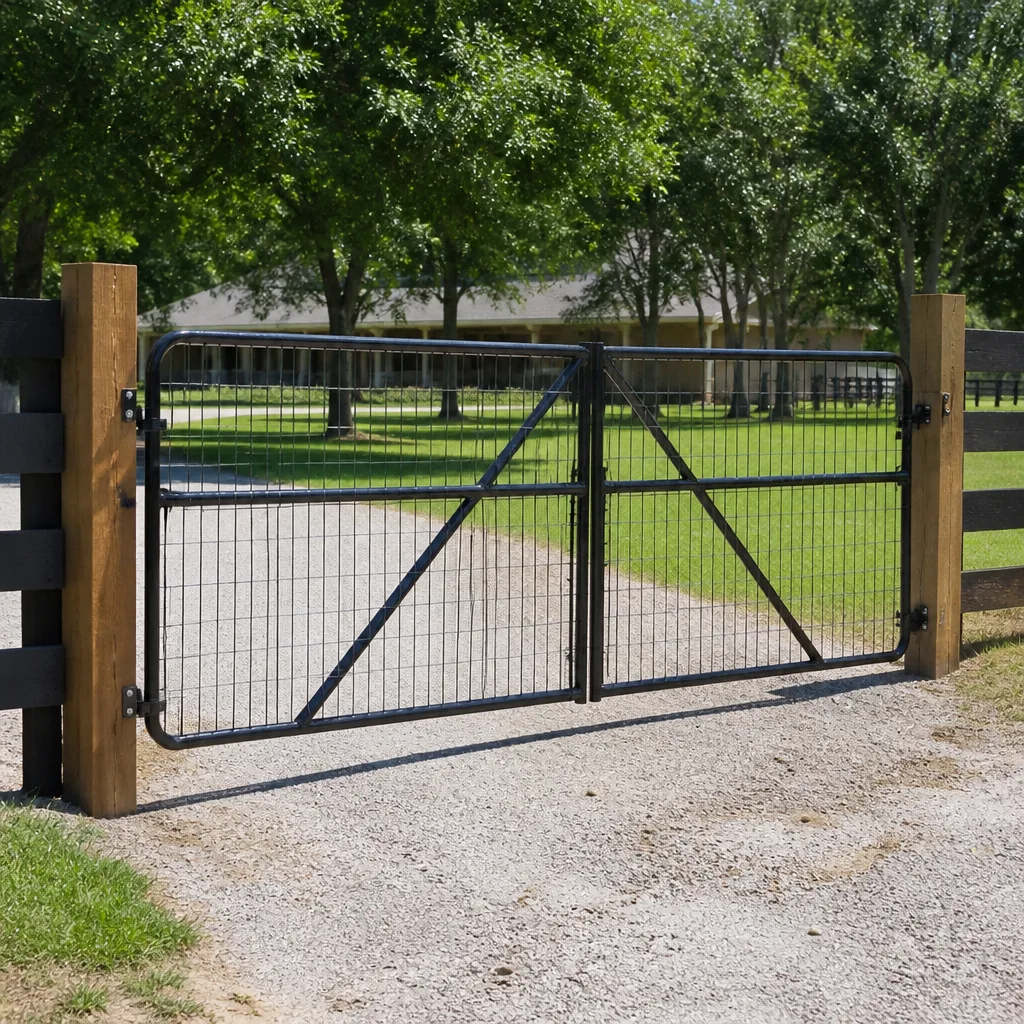 Farm & ranch
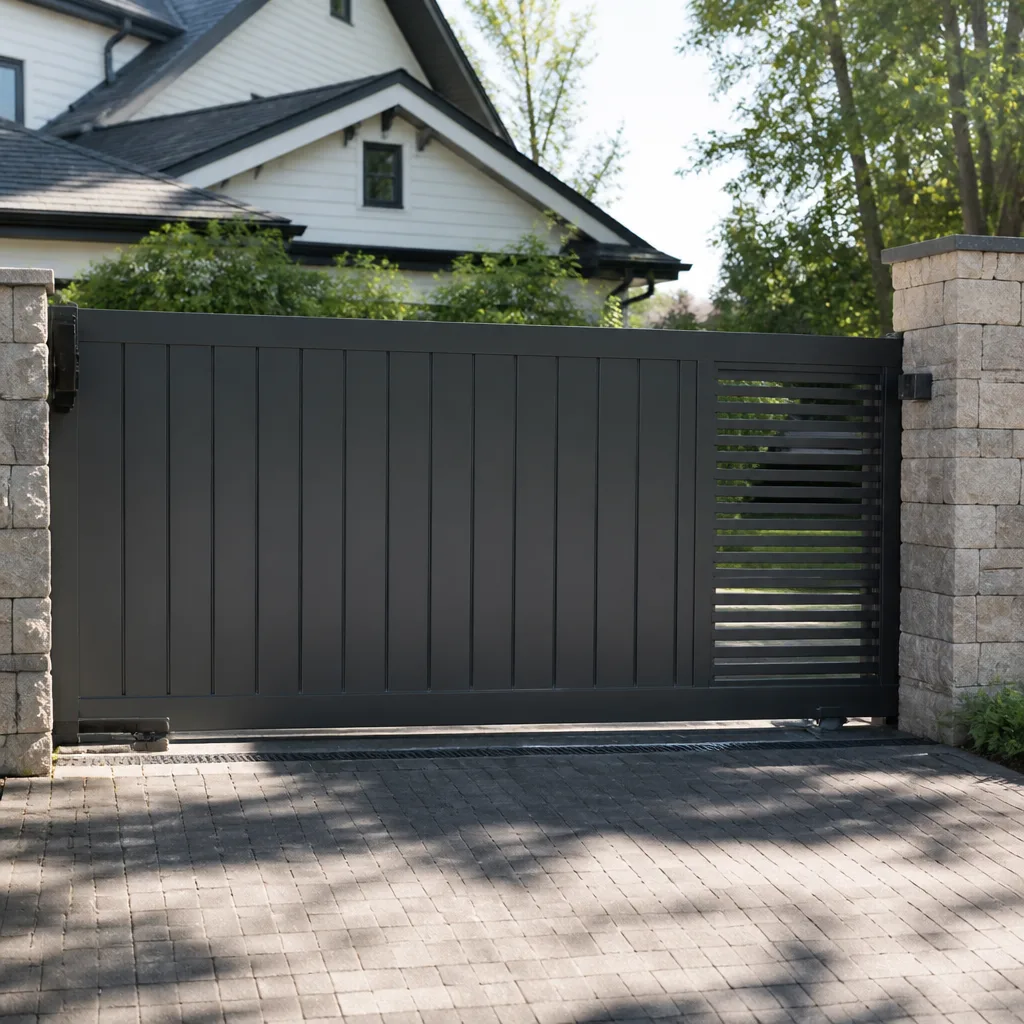 Sliding driveway gates
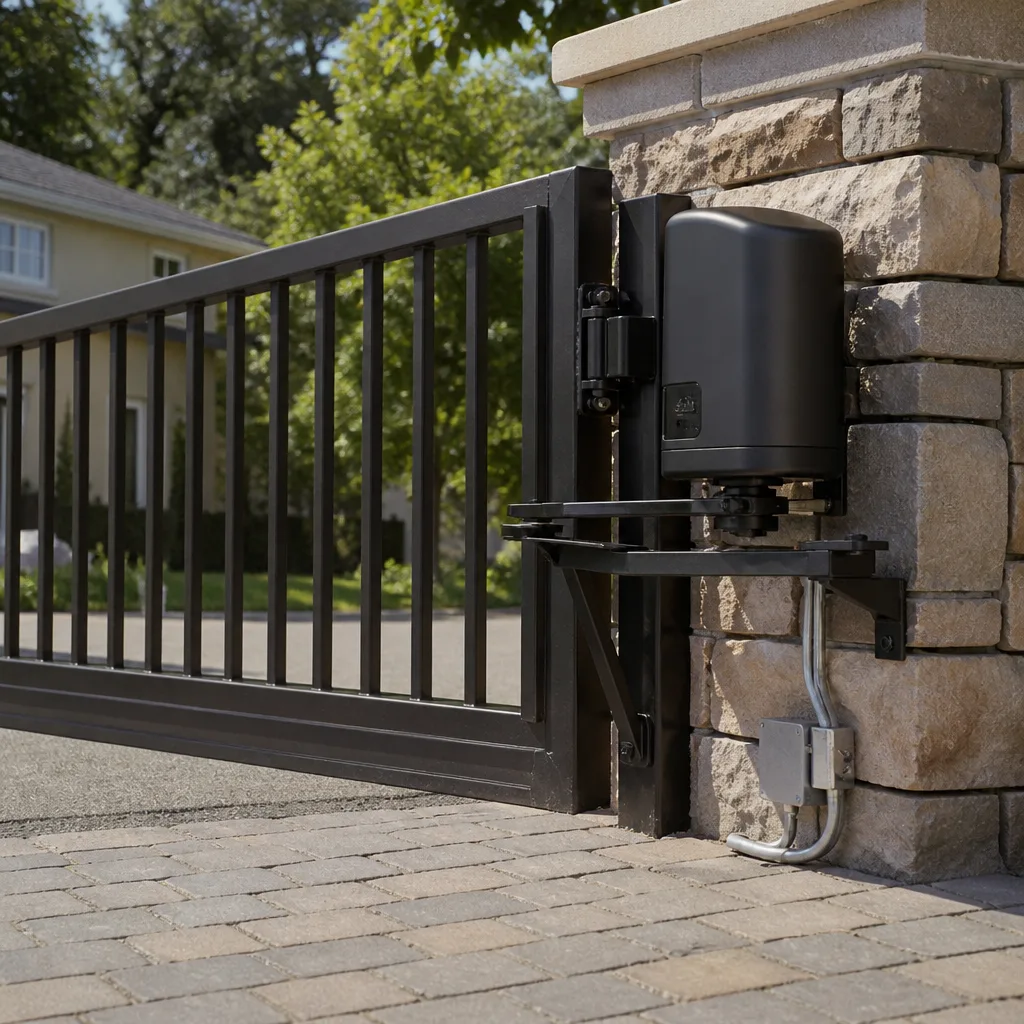 LiftMaster operators
Free on-site gate assessment - hinges, posts, and your LiftMaster or Nice gate operator checked before anything is quoted
The assessment is free and the quote is the invoice.
Get your free estimateDIY vs Professional Gate Repair: The Bellevue Homeowner’s Decision Guide
Adjusting a gate’s travel limit is a five-minute owner task. Adjusting the wrong limit on a slide gate with a worn rack gear turns a software fix into a physical repair that costs ten times more. That’s the part most DIY-versus-pro advice gets wrong. The question isn’t whether you’re handy enough to work on your own gate. It’s whether the specific repair in front of you is mechanically reversible if you get it wrong, or whether a mistake compounds into structural damage, a safety failure, or a bill you didn’t plan for. This guide separates the jobs that are genuinely safe for a homeowner in Bellevue to handle from the ones that quietly create bigger problems, and it gives you a three-question framework for deciding which bucket your gate falls into.
Quick Answer
Most DIY gate repairs that go wrong don’t fail because the homeowner lacks skill. They fail because the repair wasn’t mechanically reversible. Remote reprogramming, lubrication, sensor realignment, and minor limit adjustments on a residential operator are usually safe owner tasks. Anything touching the safety reversing system, entrapment sensors, gate force adjustment, or electrical wiring is not, and in Washington State the wiring piece is also a licensed-contractor job by code. If your gate won’t open, closes too fast, is behaving erratically, or the operator is grinding, that’s a diagnosable problem with a known fix, and a gate specialist will usually solve it in a single visit rather than a series of guesses.
Styles & brands we work with
- Wrought iron
- Wood & steel frame
- Farm & ranch
- Sliding driveway gates
- LiftMaster operators
Table of Contents
- The Reversibility Principle: Why This Isn’t About Skill
- What’s Genuinely Safe to Do Yourself
- UL 325 and the Safety Systems You Shouldn’t Touch
- Why Washington State Code Changes the Wiring Question
- The Real Cost Math of a Failed DIY Repair
- A Three-Question Framework Before You Pick Up a Wrench
- Why Brand Familiarity Matters More Than You’d Think
- What’s Different About Gates in Bellevue
The Reversibility Principle: Why This Isn’t About Skill
Every repair on a gate falls into one of two categories. It’s either reversible or it compounds. A reversible repair is one where a mistake can be undone by putting the part back where you found it. A compounding repair is one where a mistake doesn’t show up immediately, but sets off a chain of secondary damage that costs more to fix than the original problem. That distinction matters far more than how comfortable you are with tools, and it’s the single best predictor of whether DIY saves money or creates a more expensive call.
Here’s the trap. The most dangerous repairs on a gate look like the simplest ones. Reprogramming a remote is genuinely easy, but on a LiftMaster or Linear operator the remote code and the limit settings live in the same mental territory for a lot of homeowners, and the moment someone starts scrolling through setup menus to “fix” a remote that only needed a battery, they’re one wrong button away from changing travel limits on a slide gate. On a slide gate with a worn rack gear, that limit change turns a software fix into physical damage. The operator keeps pushing, the rack keeps slipping, and now you’re replacing hardware, not re-entering a code.
We’ve seen this pattern many times on gates around Bellevue, especially on older slide gates in neighborhoods where the rack has picked up years of wear. The homeowner’s original problem was minor. The second problem, the one created by a wrong adjustment, is not. That’s not a knock on the homeowner. It’s a structural fact about how gate operators work: the electronics and the mechanical assembly are tightly coupled, and adjustments to one put load on the other.
So the reversibility question is the one to ask first. If you can’t confidently put the system back exactly as it was before you touched it, the repair isn’t reversible, no matter how simple the repair looks. That’s the lens this whole guide runs through.
What’s Genuinely Safe to Do Yourself
There’s a real list of owner-serviceable tasks, and it’s longer than most gate companies will admit. If your gate is mechanically sound and the operator is functioning normally, these are jobs you can do without special tools or training. None of them change how the gate moves or how the safety systems behave.
- Remote reprogramming. Adding, removing, or re-pairing a remote or keypad entry code is a routine owner task on most residential operators, including LiftMaster and Linear units. The manual walks you through it and nothing physical changes.
- Lubrication. Hinges, rollers, the chain, and the rack on a slide gate benefit from periodic lubrication. Clean off old grit first, then apply a gate-appropriate lubricant. This is maintenance, not repair, and it’s the single best thing you can do to extend the life of the mechanical assembly.
- Sensor realignment on most residential operators. If a photo-eye or safety sensor has been nudged out of alignment, the gate may refuse to close or reverse immediately. Straightening a bracket so the sensors point at each other again is usually fine to do yourself, as long as you’re not changing the wiring or the mounting position.
- Minor limit adjustments. This one comes with a caveat. On a swing gate with a healthy operator, a small travel limit tweak is a reasonable owner task. On a slide gate, or on any gate where you’re not certain of the mechanical condition, treat this as a professional job. The reversibility test applies here more than anywhere else.
- Battery replacement in remotes, keypads, and sensor housings. Obvious, but it accounts for more “my gate is broken” calls than anything else. Change the batteries before you do anything else.
- Clearing debris from the gate path. A stone, a branch, or a buildup of leaves under a slide gate can trigger the safety system and stop the gate mid-travel. Clear the track and the path before assuming anything electrical is wrong.
Notice what’s not on this list. Nothing that involves opening the operator housing, changing force settings, rewiring anything, or modifying the safety system. Those fall into different territory, covered below.
UL 325 and the Safety Systems You Shouldn’t Touch
UL 325 is the safety standard that governs automatic gate operators in the United States, and it’s the reason gate repair isn’t the same kind of DIY-friendly task as, say, replacing a door handle. The standard requires entrapment protection on automated gates: photo-eye sensors, safety edges, or both, depending on the gate’s design and how it moves. Those systems exist to stop the gate from closing on a person, a pet, or a vehicle. They’re not accessories, and they’re not optional.
The problem is that the safety system is exactly where a frustrated homeowner is most tempted to intervene. When a gate won’t close, the safety sensor is often the cause, and the fastest way to “fix” it is to bypass it, disconnect it, or crank up the gate force so the gate pushes through whatever it thinks it’s detecting. Every one of those moves works, in the sense that the gate now closes. Every one of them also removes the protection the standard requires, and some of them put load on the gate mechanism that causes wear elsewhere.
Force adjustment deserves its own warning. On many operators, increasing the force setting is a single menu change, and it’s the fix a lot of people reach for when a gate reverses unexpectedly. But force is a safety parameter under UL 325, not a performance dial. Raising it to make a binding gate close hides a mechanical problem (a worn hinge, a misaligned track, a failing roller) and turns the gate into something that can injure someone. The right fix is to find why the gate is binding, not to make the operator push harder through it.
If your gate’s safety system is behaving erratically, the answer isn’t DIY. It’s a diagnosis. Our team handles electric gate repair as a core part of what we do, and the safety system is usually the first thing we check because it’s usually where the real problem lives. Gate won’t open, closes too fast, or the operator is grinding? Those are diagnosable problems with known fixes. Guessing at them, especially around the entrapment protection, is where the risk concentrates.
Why Washington State Code Changes the Wiring Question
Washington State’s electrical code makes most wiring work on a gate a licensed-contractor task, including low-voltage work, regardless of how straightforward it looks. That’s the part that surprises people. There’s a widespread assumption that low-voltage wiring is a gray area where a handy homeowner can operate freely. In Washington, that assumption doesn’t hold, and it’s the reason a repair that looks like a twenty-minute job on a Saturday can turn into a code problem if it goes wrong.
This matters most on automated gates because so much of the system is wired. The operator itself, the photo-eye sensors, the safety edges, the keypad, the loop detector that tells the gate a vehicle is waiting, the intercom integration on a property with a call box, and the power run feeding all of it. Every one of those components is part of an electrical system, and the code doesn’t carve out an exception for the ones that run on low voltage.
What this means in practice: if your diagnosis leads you toward a wiring problem, the DIY path closes. That’s not a sales pitch. It’s a fact about how the work is regulated in this state, and it’s worth knowing before you start, because the cost of discovering it mid-repair is higher than the cost of asking upfront. A licensed electrician or a gate specialist who handles the electrical side is the right call for anything that touches the wiring, the power feed, or the control board connections.
The same logic applies to permits. Most cities require a permit for electrical work and for structural changes to a gate or its posts, so before any job that involves new wiring or a changed gate footprint, ask the city’s building department what’s required. Bellevue is no exception. A quick call to the city before you start saves a lot of grief later, and it’s the kind of question a gate specialist answers as a matter of routine.
The Real Cost Math of a Failed DIY Repair
The DIY case usually rests on the price of the part. The real math is bigger than that, and it’s worth walking through honestly because the numbers are the reason this decision matters. A failed DIY repair on a gate typically carries four separate costs, and only one of them is the part you bought.
- Parts that can’t be returned. Once a control board, a sensor, or an operator component has been installed and powered up, it’s usually yours. If the diagnosis was wrong, you’re holding a part you didn’t need and can’t send back.
- Secondary damage from misdiagnosis. This is the big one. A wrong adjustment or a wrong part puts stress on the mechanical assembly. A mis-set limit on a slide gate wears the rack. A raised force setting wears the hinges and the operator gearbox. A bypassed sensor means the gate keeps closing on an obstruction until something breaks. Each of these is a separate repair on top of the original one.
- The premium for undoing amateur work. This is real and it’s common across the trade. When a technician arrives to find a half-disassembled operator, disconnected wiring, or a control board that’s been reprogrammed into an unknown state, the job takes longer than a clean repair would, and the estimate reflects that. The customer pays for the original repair plus the time to reverse what was done to it.
- The delay cost. A gate that’s down for a week while you wait on a part and then discover it wasn’t the right part is a week of a gate that has to be opened by hand, on a property that may depend on it for access control. For a homeowner that’s an inconvenience. For an HOA or a commercial property, it’s a security and liability issue that draws complaints.
The comparison isn’t DIY cost versus professional cost. It’s DIY cost, plus the probability of a failed attempt, times the cost of the failure, versus the professional cost. On a genuinely reversible repair, the DIY math usually wins. On a compounding repair, it usually loses, sometimes badly. That’s the whole reason the reversibility principle matters so much on a gate.
An honest gate specialist will tell you which repair you’re looking at before you commit to anything. When you call us, the estimate is free and the price is set per job by a written estimate, so you know what you’re agreeing to before any work starts. That means you can compare the professional number against the DIY scenario with real information instead of a guess.
A Three-Question Framework Before You Pick Up a Wrench
Three questions predict, with reasonable reliability, whether a given gate repair is a safe DIY job or a professional one. Ask them in order. If you get a “no” on any of them, stop and call a specialist. The framework is deliberately simple, because the decision needs to be fast and it needs to hold up when you’re frustrated and the gate is stuck open.
- Can I put this back exactly as I found it? If your repair involves changing a setting, moving a bracket, or opening a housing, can you restore the original state with confidence? If the answer is yes, you’re probably in reversible territory. If it’s “probably” or “I think so,” that’s a no. Reversible means you know the original value, not that you can guess at it.
- Does this touch the safety system or the wiring? If the repair involves the photo-eye sensors, the safety edges, the force setting, or anything electrical, it’s a professional job. The safety systems are governed by UL 325, and the wiring is governed by Washington State code. Neither is a judgment call you want to make at the gate with a screwdriver in hand.
- Do I know what the actual failure is? This is the question people skip. If the gate is behaving erratically and you’re not sure why, you don’t have a repair yet, you have a symptom. Replacing parts until the symptom goes away is the most expensive way to fix a gate. A proper diagnosis comes first, and diagnosis is what a specialist does in a single visit because they’ve seen the same failure mode on the same family of operator dozens of times.
If you can answer yes to all three, the repair is likely yours to handle. If you can’t, the fastest way to save money is to get a specialist on-site rather than a generalist guessing at your control board. Automated gate repair is its own specialty, and it’s all we do, so the diagnosis is usually straightforward once someone who knows the system is standing in front of it.
One practical note on Bellevue gates in particular: the weather here accelerates wear on moving parts. Wet winters and long damp stretches work on hinges, rollers, and racks, and they can make a gate that was fine in summer bind up by January. That seasonal wear is a common reason a limit that was set correctly last year doesn’t behave correctly this year. If your gate’s behavior changed with the weather, that’s worth telling the technician when you call, because it narrows the diagnosis fast.
Why Brand Familiarity Matters More Than You’d Think
Gate operators are not interchangeable. A LiftMaster control board and a FAAC control board run on different logic, expose different diagnostics, and fail in different ways. The same symptom (gate opens but won’t close) can point to a completely different component depending on which brand of operator is on the post. That’s why brand familiarity is not a marketing detail on a gate repair. It’s a diagnostic advantage that changes how quickly the real problem gets found.
We’re trained and experienced across nine gate and operator brands: LiftMaster, FAAC, BFT, Linear, Viking, Ghost Controls, DoorKing, Elite, and Mighty Mule. That range matters in two specific ways. First, it means a technician can read the fault on your operator instead of defaulting to a replacement recommendation because the system is unfamiliar. Replacing a control board is an easy answer when you don’t know the system. It’s rarely the cheapest one for the customer. Second, it means the diagnosis covers both halves of the gate. A gate has a mechanical side and an electrical side, and a problem on one frequently produces symptoms that look like a problem on the other. A specialist who can evaluate both in a single visit doesn’t have to come back a second time with a different set of tools.
For example, we work on FAAC systems regularly, and the hydraulic operators in that family behave very differently from a mechanical LiftMaster unit when they’re low on fluid or when the bypass valve is set wrong. A technician who’s never worked on a FAAC might mistake a hydraulic issue for an electrical fault and start replacing boards. The reverse mistake happens too. A general handyman who’s comfortable with wiring but unfamiliar with gate mechanics might chase a control board problem when the real issue is a worn roller binding the gate and tripping the safety system.
If your gate repair decision comes down to DIY versus professional, the brand on your operator is worth mentioning when you call. It tells the specialist what to expect before they arrive, and it’s the difference between a visit that starts with a diagnosis and a visit that starts with a guess.
What’s Different About Gates in Bellevue
Gates in Bellevue have a specific set of pressures that don’t show up in every market. The housing stock here includes a wide mix of property types, from single-family homes with a driveway gate to multi-family properties and commercial sites with controlled access, and each type puts different demands on the gate system. A residential swing gate on a hillside lot, a slide gate on a tight urban driveway, and an HOA entrance gate with intercom and loop detectors are three different repair problems with three different failure modes.
The climate is the other Bellevue-specific factor. The damp stretches through the wet season are hard on the moving parts: hinges, rollers, chains, racks, and the seals on operator housings. Water intrusion into an operator housing is a common cause of control board failure, and it’s the kind of problem that shows up weeks after the weather that caused it. That’s why we recommend checking the operator housing seal and the gate’s mechanical lubrication as a seasonal habit rather than a once-ever task. A little attention in the fall pays for itself in the spring.
Bellevue also has a lot of gates on properties where access control matters beyond convenience. HOAs, gated communities, and commercial sites depend on the gate working, and a gate that’s stuck open is a security and liability problem, not just an inconvenience. For those properties, the DIY-versus-professional question often has a clear answer: the risk of a compounded failure isn’t worth the savings on a reversible repair. If you’re a property manager, the calculus shifts further toward professional repair because the gate’s reliability is part of what you’re responsible for.
We work on residential, multi-family, and commercial gate systems, and the diagnosis process is the same across all three: find the actual failure, explain it, and quote the fix. If you want to read more about the range of what we handle, our main Bellevue gate repair page covers the full scope. For the specific repair side, the gate repair page goes into more detail on what’s involved.
Common Mistakes to Avoid
- Bypassing the safety sensor to make the gate close. It works, and it’s the single most dangerous thing you can do on an automated gate. The sensor exists under UL 325 for a reason, and disconnecting it removes the protection the gate was built with. If the sensor is the problem, the fix is to find out why it’s triggering.
- Raising the force setting instead of finding the bind. A gate that reverses unexpectedly is usually binding somewhere, and force is not the fix. Raising it wears the hinges, the rollers, and the gearbox, and it turns a safe gate into an unsafe one.
- Replacing a control board on a guess. Control boards are expensive and not returnable once powered up. A wrong guess on a LiftMaster or BFT board is a real cost, and the actual failure is often a sensor, a limit, or a wiring connection that a proper diagnosis would have found.
- Adjusting slide gate limits without checking the rack. On a slide gate with a worn rack gear, a limit change is how a software problem becomes a physical one. Check the mechanical condition first, and if you’re not sure, don’t adjust.
- Doing electrical work assumed to be “just low voltage.” Washington State code treats low-voltage wiring as licensed-contractor work, and this is where a lot of DIY gate repairs quietly cross a line. The code doesn’t make an exception for repairs that look simple.
- Skipping the permit question on structural or wiring work. Most cities, Bellevue included, require a permit for electrical work and for structural changes to a gate or its posts. A call to the city’s building department before you start is cheap; discovering the requirement after the work is done is not.
- Waiting for a small problem to become a large one. A gate that’s harder to open than it used to be, or that’s a little slower to close, is usually telling you something. Deferred maintenance on a gate compounds the same way a wrong adjustment does.
See the difference
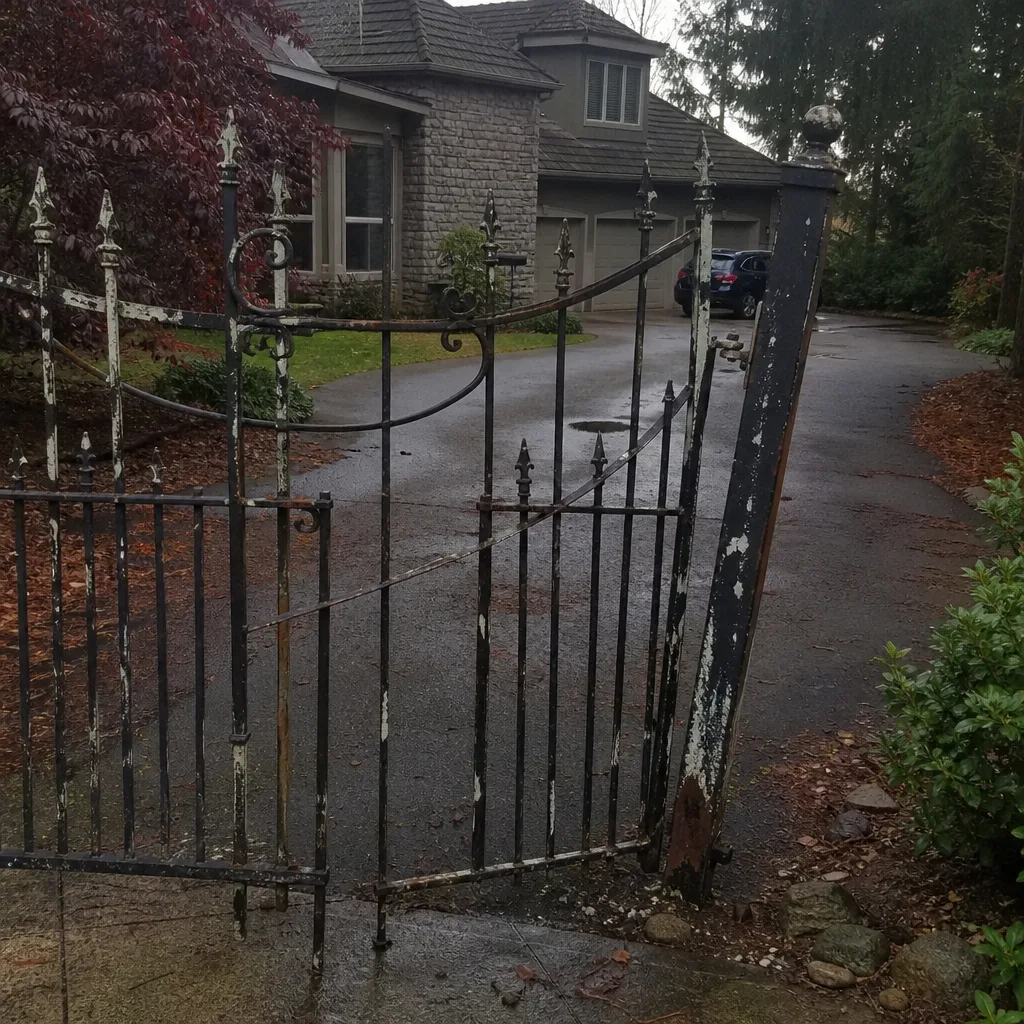 Before
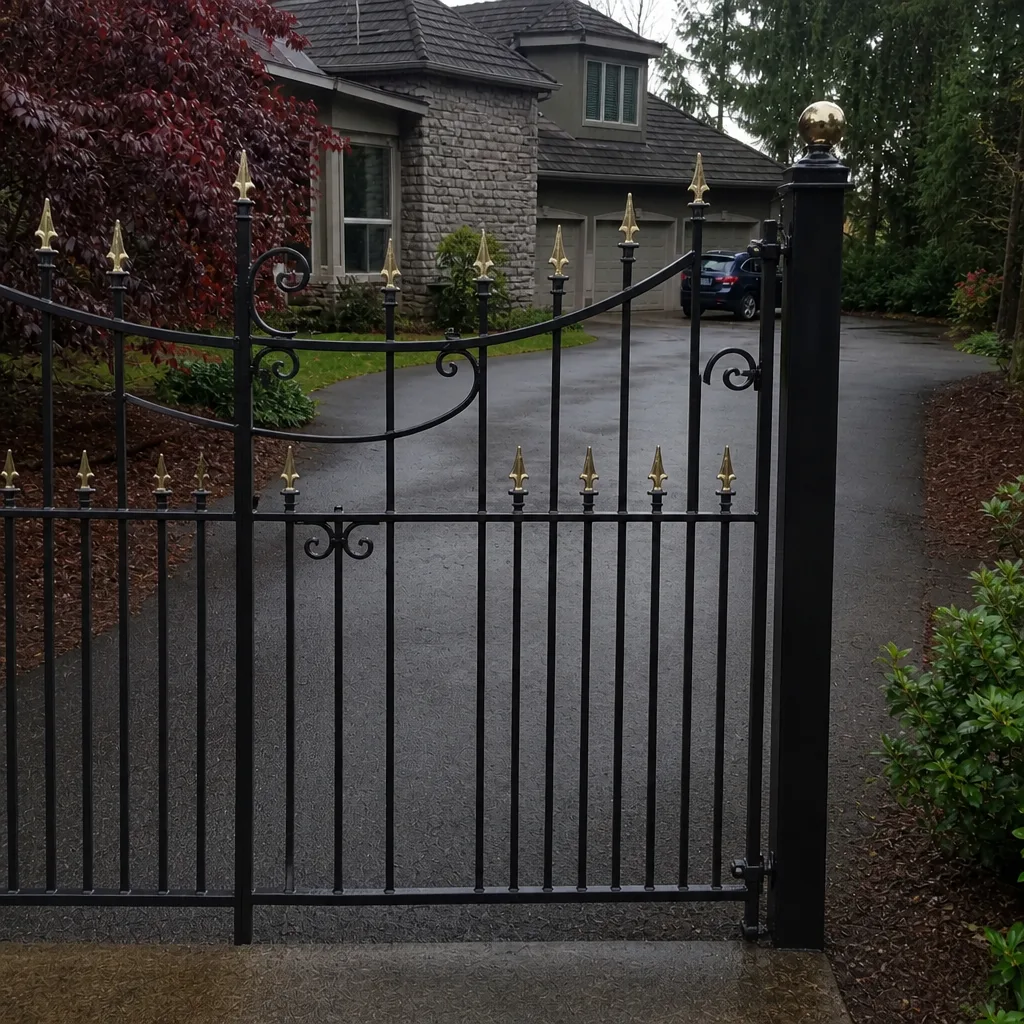 After
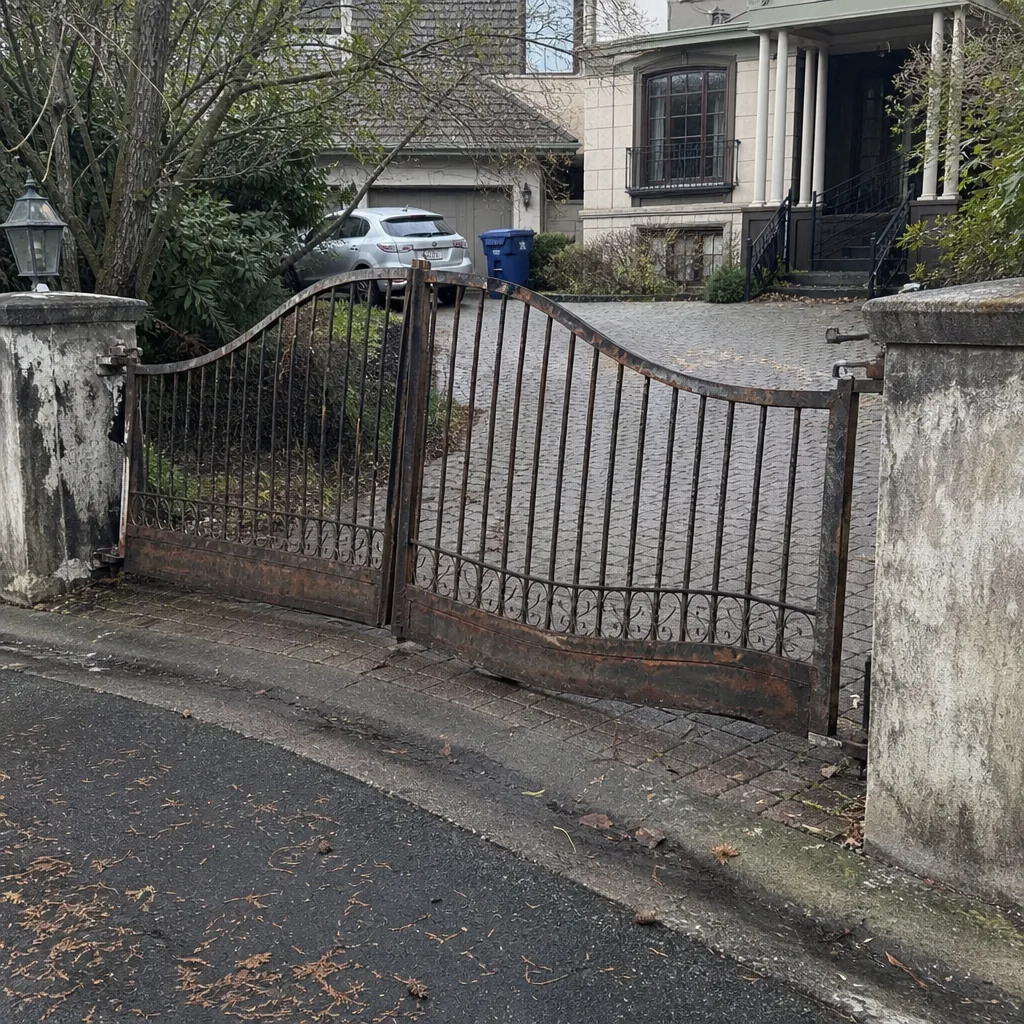 Before
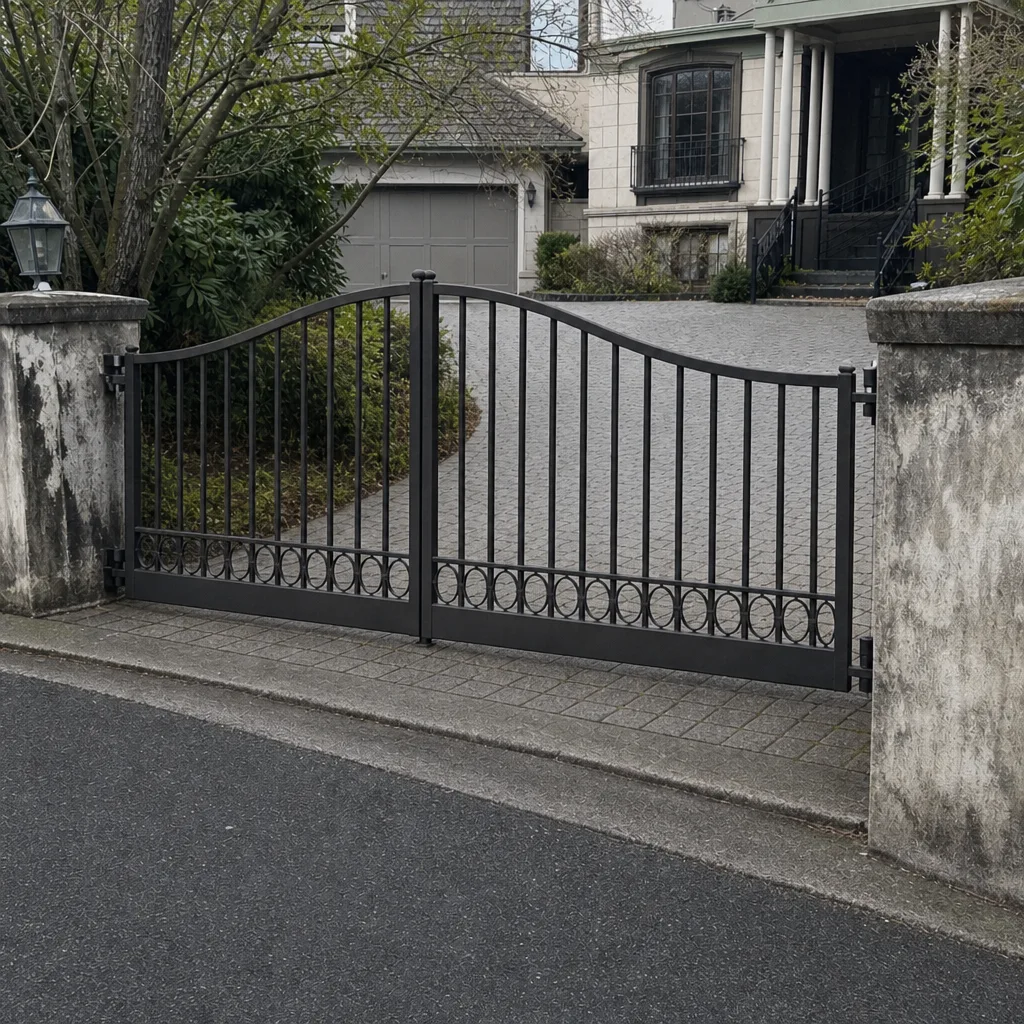 After
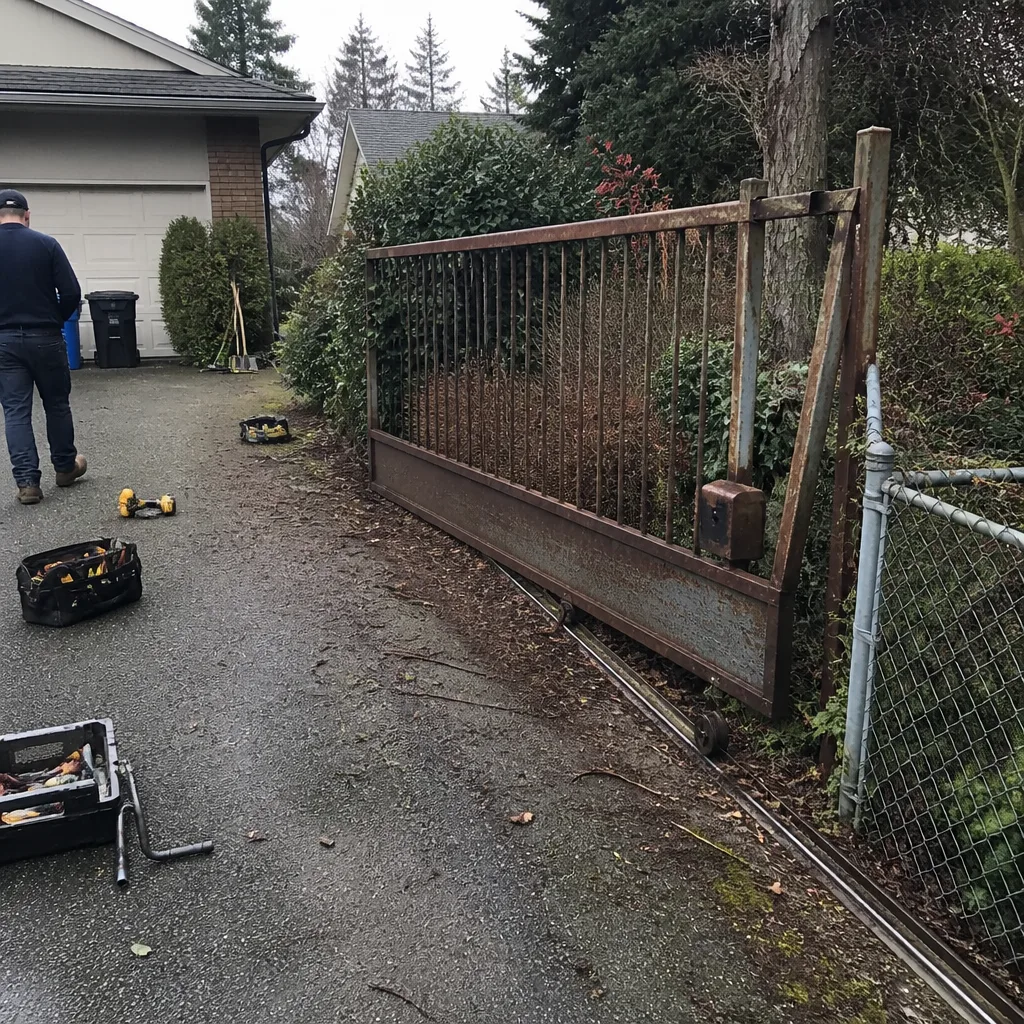 Before
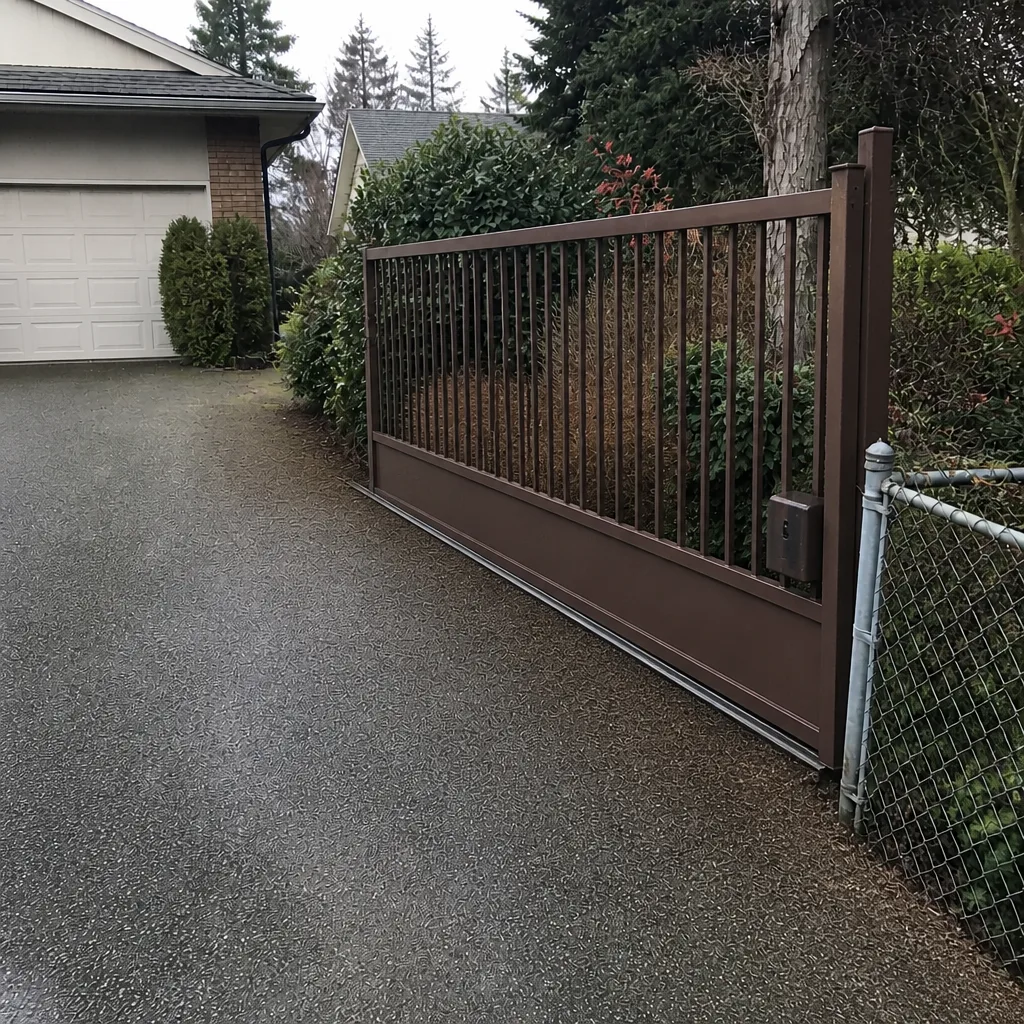 After
When to Call a Professional
Call a professional when the repair touches the safety system, the wiring, or the force setting. Call when the gate is behaving erratically and you don’t know why, because that’s a diagnosis problem before it’s a repair problem. Call when the operator is grinding, when the gate won’t open or closes too fast, or when a part has already been replaced and the symptom didn’t go away. Call for anything on a property where access control matters, because a gate that’s down is a liability in a way a loose hinge on a backyard fence is not. And call if you’ve started a repair and hit the point where you’re not confident you can put it back the way it was. That’s not a failure. It’s good judgment, and it’s the cheapest moment to bring in a specialist.
Bellevue Gate Repair offers free estimates in Bellevue. Call (855) 683-9015 and tell us what the gate is doing and which brand of operator it’s running. We answer 24/7. Fast dispatch from 7am to 7pm, Sunday through Friday. A call outside dispatch hours is booked into the next opening, Sunday through Friday, 7am to 7pm. Our technicians have up to experience, and the estimate is free and the price is set per job by a written estimate, so you know the number before any work starts.
Frequently Asked Questions
On a swing gate with a healthy operator, a minor travel limit adjustment is usually a reasonable owner task. On a slide gate, or any gate where you’re not certain of the mechanical condition, it’s a professional job, because a wrong limit on a worn rack gear turns a software fix into a physical repair. If you don’t know the original value and can’t restore it exactly, treat it as a call. Call (855) 683-9015 for an exact quote, and estimates are free.
Most wiring on a gate, including low-voltage wiring, is a licensed-contractor task under Washington State electrical code, and the code doesn’t carve out an exception for repairs that look simple. Structural changes to a gate or its posts usually need a permit from the city as well. Before any wiring or structural job, call the city’s building department and ask what’s required. For the repair itself, call (855) 683-9015 and we’ll get a specialist on-site.
A gate that won’t close is usually a safety sensor problem, which means it’s not a DIY repair. The sensor is part of the entrapment protection system required under UL 325, and the safe fix is to find out why it’s triggering, not to bypass it. A gate that reverses unexpectedly can also mean the gate is binding somewhere, which force adjustment won’t fix. Call (855) 683-9015, and estimates are free.
The price is set per job by a written estimate after we look at the gate, so we don’t quote a number before we know what’s actually wrong. That’s not evasiveness, it’s how a real diagnosis works: the difference between a sensor realignment and a control board replacement is significant, and guessing at it before the visit doesn’t help anyone. Call (855) 683-9015 for an exact quote, and estimates are free.
Same-day service is often possible because automated gate repair is all we do and our technicians have up to experience with the systems on Bellevue properties. We answer 24/7. Fast dispatch from 7am to 7pm, Sunday through Friday. A call outside dispatch hours is booked into the next opening, Sunday through Friday, 7am to 7pm. Call (855) 683-9015 and we’ll tell you what’s available.
That’s a common situation, and it’s not a problem we judge. What it does mean is that the diagnosis has to start by establishing what was changed and what state the operator is in now, because a half-finished repair can produce symptoms that look like a different failure entirely. A specialist diagnoses both the mechanical gate structure and the electrical components in a single visit. Call (855) 683-9015 for a free estimate.
We’re trained and experienced across nine gate and operator brands: LiftMaster, FAAC, BFT, Linear, Viking, Ghost Controls, DoorKing, Elite, and Mighty Mule. That range means we can read the fault on your operator instead of defaulting to a replacement because the system is unfamiliar. If you’re not sure what brand you have, tell us what you can see on the housing when you call (855) 683-9015, and estimates are free.
The Bottom Line
The DIY-versus-professional question for gate repair comes down to reversibility, not skill. Remote reprogramming, lubrication, sensor realignment, and minor swing gate limit adjustments are reasonable owner tasks. Anything that touches the safety system, the force adjustment, or the wiring is not, and in Washington State the wiring piece is also a regulated, licensed task. Three questions decide it: can you put it back exactly as you found it, does it touch the safety system or the wiring, and do you actually know what the failure is. A “no” on any of them means the fastest, cheapest path is a specialist on-site rather than a generalist guessing at your control board. Bellevue gates face real seasonal wear, and a small problem caught early is always cheaper than a compounded one.
If you’re in Bellevue and your gate is stuck, erratic, or just not behaving the way it used to, call (855) 683-9015 for a free estimate. We answer 24/7. Fast dispatch from 7am to 7pm, Sunday through Friday, and a call outside dispatch hours is booked into the next opening. Tell us the symptom and the brand, and we’ll get a gate specialist on-site rather than a generalist.
Written by the team at Bellevue Gate Repair.