
Last updated November 15, 2026
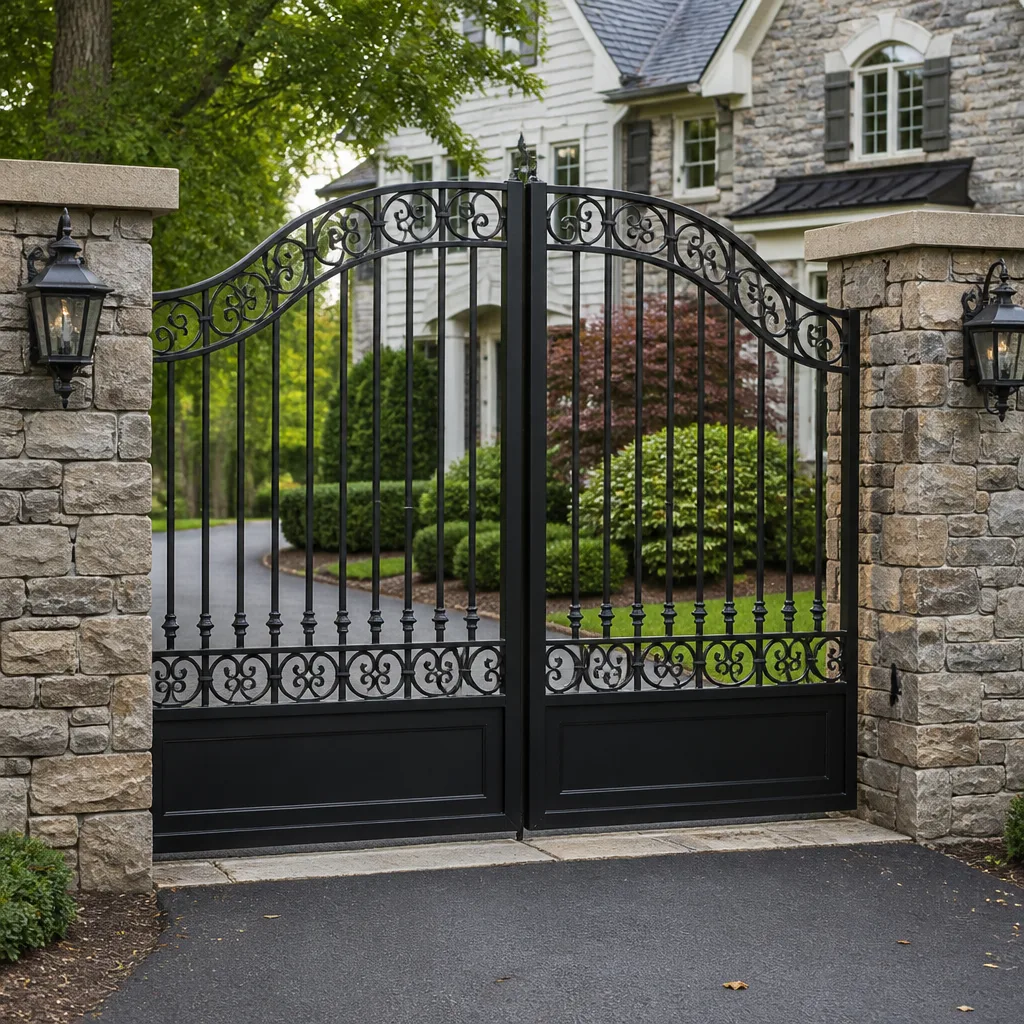 Wrought iron
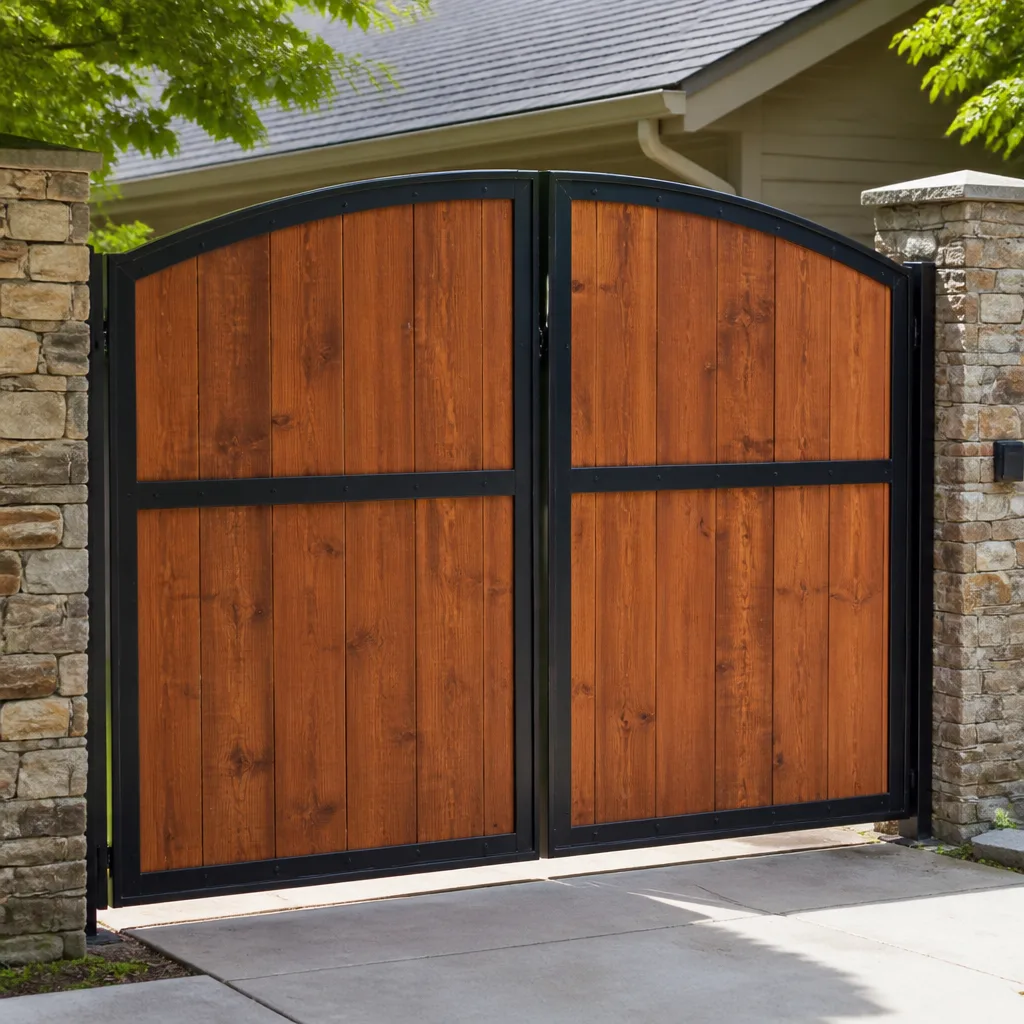 Wood & steel frame
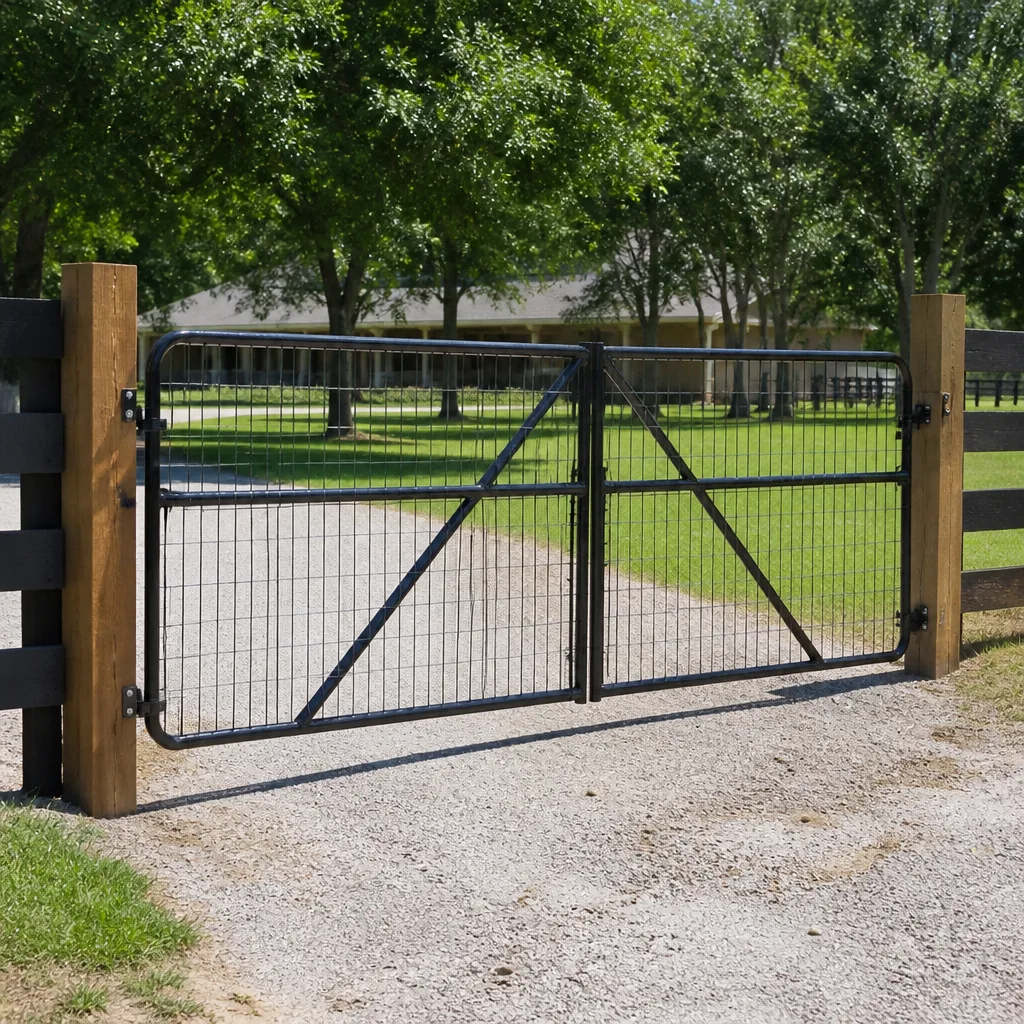 Farm & ranch
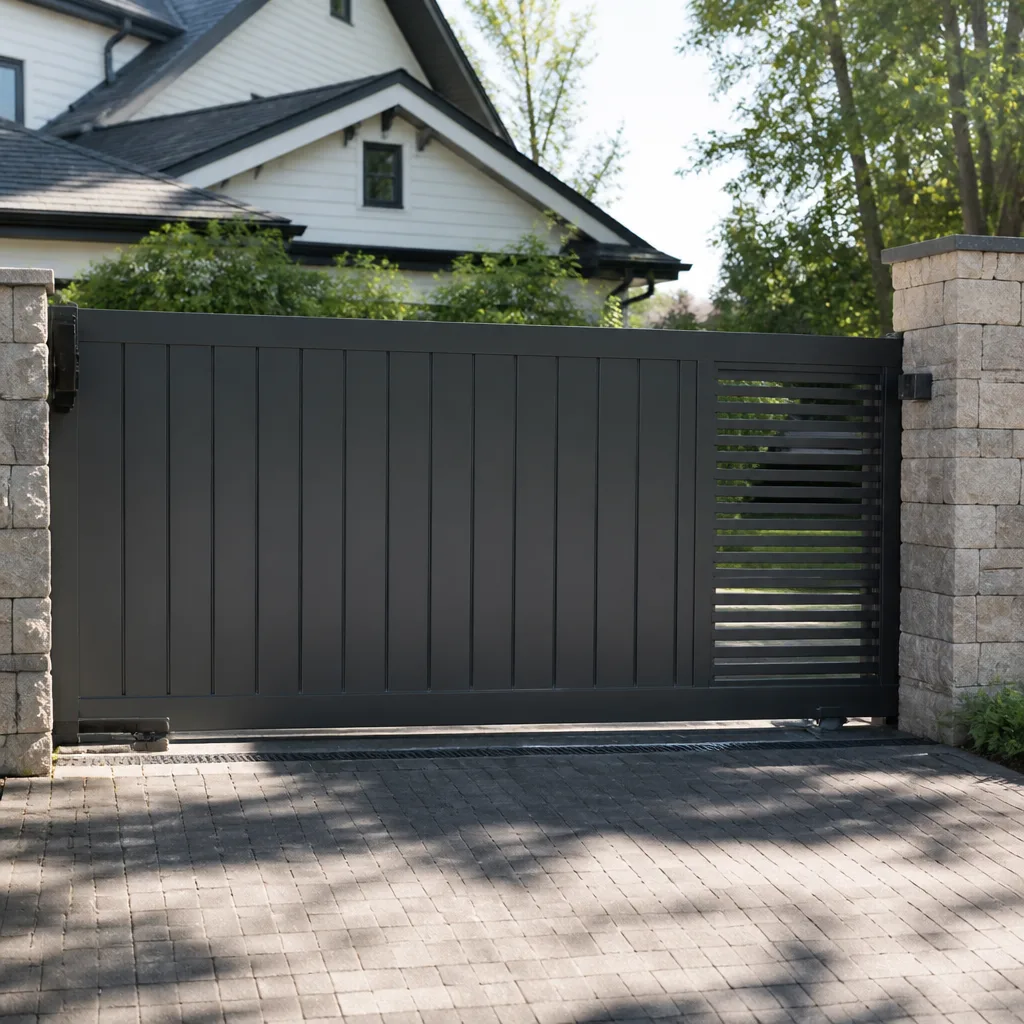 Sliding driveway gates
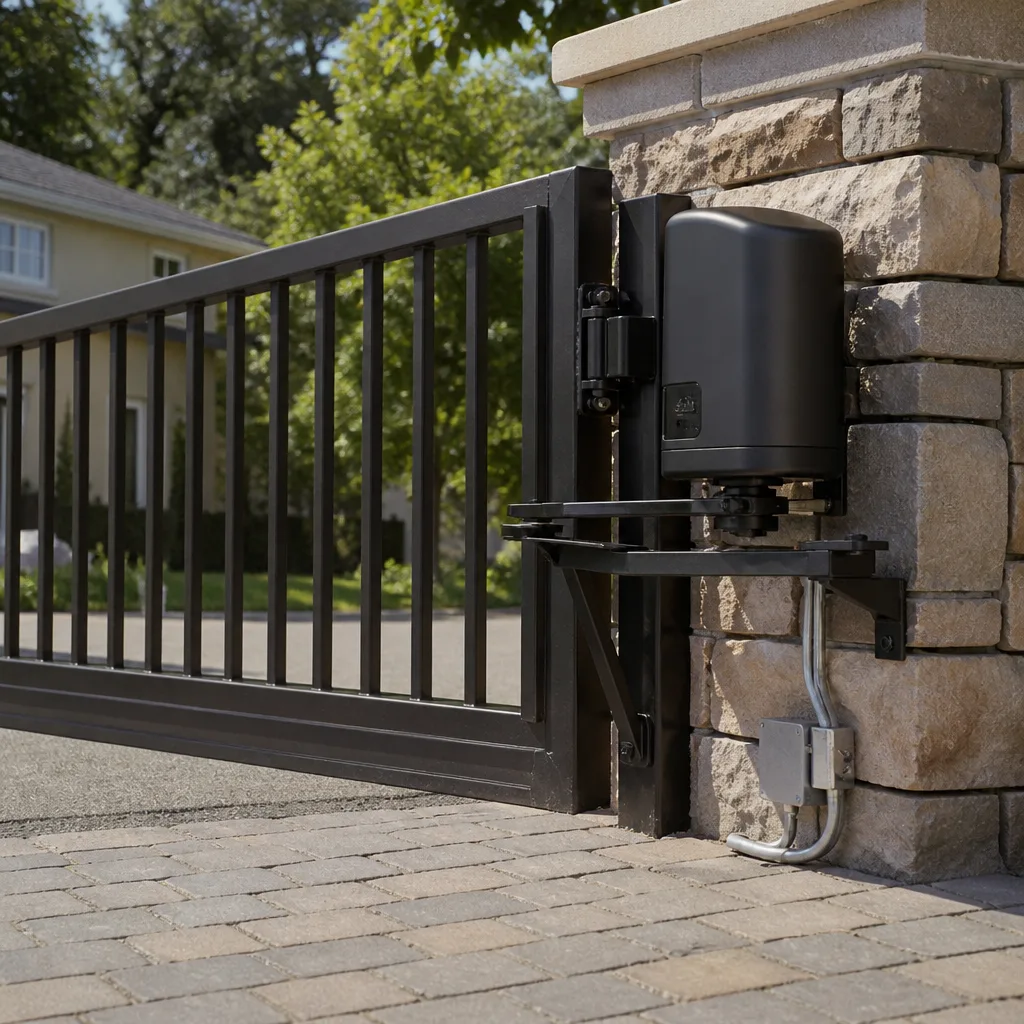 LiftMaster operators
Free on-site gate assessment - hinges, posts, and your LiftMaster or Nice gate operator checked before anything is quoted
The assessment is free and the quote is the invoice.
Get your free estimateThe Complete Guide to Gate Repair in Bellevue
Most gate failures in Bellevue aren’t random. They follow patterns. The same four or five root causes show up again and again, and the reason a gate breaks twice in one season is almost always that the first visit treated the symptom instead of the source. A control board gets swapped when the real problem is a ground fault. A dragging gate gets adjusted when the posts have shifted in the clay. This guide maps those patterns for Bellevue specifically: the soil, the wet winters, the operator brands that dominate local subdivisions, and the difference between a gate that needs a tune-up and one that needs structural work. By the end, you’ll be able to describe your gate’s symptom accurately before a technician arrives.
Quick Answer
Gate repair in Bellevue usually falls into one of four categories: operator and electrical faults, post or frame movement from clay soil, track and hardware wear, and impact or storm damage. Diagnosing which category your gate falls into before you call saves time and money, because each one requires a different kind of fix and a different skill set. Most repair and adjustment work is handled with a single on-site visit and a written estimate agreed before any work begins.
Styles & brands we work with
- Wrought iron
- Wood & steel frame
- Farm & ranch
- Sliding driveway gates
- LiftMaster operators
Table of Contents
- Why Bellevue Gates Fail: The Four Root Causes
- Clay Soil, Post Shift, and the “Dragging Gate” Problem
- Operator Brands Common in Bellevue and Their Failure Modes
- Adjustment vs. Structural Repair: How to Tell the Difference
- Wrought Iron vs. Aluminum: How Each Fails in a Wet Climate
- Electric Gate Repair: What a Specialist Actually Checks
- How to Triage Your Gate Before You Call
- When Repair Isn’t the Answer: Gate Installation and Automation
Why Bellevue Gates Fail: The Four Root Causes
In our experience working throughout Bellevue, almost every repair call traces back to one of four problems. Knowing which one you’re dealing with changes what you tell the technician, what tools they bring, and how long the job takes.
1. Operator and electrical faults. Control boards, limit switches, photo-eye sensors, loop detectors, and wiring connections. These are the most common cause of a gate that “just stopped” or behaves erratically. The gate structure itself may be perfectly sound.
2. Post and frame movement. Bellevue’s heavy winter rains soak the clay-heavy soil that underlies much of the Eastside, and that soil swells when wet and shrinks when dry. A gate post set in this ground can shift incrementally over a season. The gate itself hasn’t changed; the ground beneath it has.
3. Track, roller, and hardware wear. Sliding gates ride on tracks and rollers; swing gates rely on hinges and, on heavier gates, a plate or pivot. These parts wear on a predictable schedule. A grinding sound is usually telling you which component is at the end of its life.
4. Impact and storm damage. Downed branches, vehicles, and wind events bend frames, shear hinges, and knock sensors out of alignment. Hail is uncommon in Bellevue, so impact damage here tends to be from trees and vehicles rather than weather alone.
Each of these has a different repair path. Treating a post-shift problem as an operator problem, or vice versa, is how a gate ends up back in the shop a few weeks later.
Clay Soil, Post Shift, and the “Dragging Gate” Problem
If your gate drags, scrapes, or won’t close fully, the operator is probably not the culprit. In Bellevue, a dragging gate is far more often a symptom of post shift caused by the region’s clay-heavy soil. Clay expands as it absorbs water and contracts as it dries, and over a wet winter and dry summer, a post can move enough to rack the gate frame out of square. When that happens, the gate no longer travels in a straight line, and the operator fights the geometry instead of the load.
Here’s what a specialist checks when a gate drags:
- Post plumb and level. A post that has shifted even slightly out of plumb will pull the gate into the frame or away from the latch.
- Frame square. A gate that was square at installation can rack as the posts move, which throws off every clearance downstream.
- Hinge wear and sag. Swing gates on sagging hinges drag at the bottom and strain the operator arm.
- Track alignment and debris. On sliding gates, a track that has shifted with the ground or collected grit will bind the rollers.
- Ground clearance. A gate that clears the ground by a comfortable margin in one season can sit a fraction too low the next.
The fix for post shift isn’t a bigger operator or a stronger arm. It’s resetting the post to proper footing depth and re-squaring the frame so the gate travels freely again. Understanding the soil is what separates a repair that holds from one that doesn’t. This is exactly the kind of mechanical diagnosis a specialist makes on-site, and it’s one reason we recommend describing the symptom precisely when you call.
Operator Brands Common in Bellevue and Their Failure Modes
Bellevue has a mix of residential subdivisions, HOA entry gates, and multi-family properties, and the operators installed here reflect that. We work on electric gate repair across nine major brands, including LiftMaster, FAAC, BFT, Linear, Viking, Ghost Controls, DoorKing, Elite, and Mighty Mule. Which brand you have tells a specialist a lot about where to look first.
LiftMaster. Common on residential swing and slide gates. We typically find limit switch drift and photo-eye misalignment, especially after a wet winter.
Viking. Frequently installed on residential properties. Control board issues and battery backup faults are what we usually see, often after a power event.
DoorKing. Common on multi-family and commercial entry gates and access-control systems. When a DoorKing gate behaves erratically, the cause is often wiring, loop detectors, or intercom integration rather than the operator motor itself.
Linear. Found on both residential and light commercial gates. Transmitter and receiver faults and limit adjustments come up regularly.
These are not the only brands we handle, but they show up often enough that we know their brand-specific failure modes well. A single-brand shop will default to what it sells; that’s why we diagnose the actual problem rather than assuming the brand on the label is the problem.
If your gate stops responding and you’re not sure of the brand, don’t guess. Note what it’s doing, how it’s behaving, and whether there are any lights or codes on the operator housing, then bring that to the call.
Adjustment vs. Structural Repair: How to Tell the Difference
Not every gate problem is structural, and not every structural problem can be adjusted away. Getting this distinction right is the difference between a one-visit fix and a repeat call. Here’s how we separate the two.
Signs your gate likely needs only adjustment:
- It opens and closes but stops slightly short, or reverses mid-travel.
- The operator runs but the gate doesn’t move, or moves in one direction only.
- A sensor triggers the reverse even though the path is clear.
- The gate’s travel is smooth but the limit positions have drifted.
Signs the problem is structural:
- The gate visibly drags, scrapes, or hits the ground.
- You can see that the gate leaf is out of square or the posts are leaning.
- The gate sags at the latch or won’t fully close without force.
- There’s rust jacking, bent framing, or a hinge that’s pulled loose from the post.
Adjustment work is fast and often done in a single visit. Structural repair, whether it’s resetting a post, re-squaring a frame, or rebuilding a hinge connection, takes more time and a written estimate agreed before work begins. The honest test is simple: if the gate’s geometry is sound and only the electronics or limit settings are off, it’s an adjustment. If the gate itself is fighting the ground or its own frame, you’re looking at structural work, and trying to fix it with adjustment alone is what leads to a second breakdown in the same season.
Wrought Iron vs. Aluminum: How Each Fails in a Wet Climate
Bellevue’s wet climate is hard on metal, but wrought iron and aluminum age differently, and the repair approach differs too. Knowing which material you have helps you understand what’s going wrong.
Wrought iron is dense and strong, which makes it excellent for security and structural gates. The problem in a wet climate is rust. Water gets into seams and welds and stays there; the metal corrodes from the inside, then rust jacking pushes away paint and coating and opens the metal to more water. Left alone, a wrought iron gate can lose structural integrity at its joints. Repair means cutting out the compromised section, welding in a replacement, and recoating the whole span so the failure point doesn’t reappear.
Aluminum doesn’t rust through the way iron does, but it corrodes, and its failure modes are different. Aluminum gates are lighter and more flexible, which means they’re more susceptible to bending at hinges and frame corners, and more likely to have inconsistent clearances as the frame flexes. Skin and extrusion damage from impact is more common than structural rust. Repair on aluminum is often about re-straightening, re-hinging, and replacing extrusions rather than welding.
What this means in practice: on a wrought iron gate, a rust spot near a hinge is a structural warning, not a cosmetic nuisance. On an aluminum gate, a bent frame at the hinge and a sagging gate are usually the same problem. Treating either one as cosmetic is how a gate ends up needing replacement instead of repair.
Electric Gate Repair: What a Specialist Actually Checks
Automated gate repair is its own specialty, and it’s what we do. The electrical and mechanical systems fail for different reasons, and a specialist diagnoses both in a single visit rather than sending you to a second vendor for the electrical side.
When your electric gate stops working or behaves erratically, here’s what a specialist works through:
- The operator and control board. Fault codes, board condition, battery backup, and whether the operator is receiving the signal it should be.
- Power and wiring. The power run, conduit, and low-voltage connections. A wiring fault can mimic a dead operator.
- Safety devices. Photo-eyes, loop detectors, and safety edges. These cause the most erratic behavior because they’re designed to reverse the gate when something trips them.
- Access control and intercom. Keypads, card readers, and intercom integration, especially on multi-family and commercial gates where these components are shared with the operator.
- The mechanical gate. The operator can’t do its job if the gate structure is fighting it. We always check the frame, hinges, and track alongside the electrical system.
Wiring and power are where gate work gets dangerous. Gate operators run on high-voltage supply, and heavy panels can crush anyone caught in their path. This is not a job for a generalist or a DIY repair. The safe move is to leave the electrical side to a trained professional. If your gate is stuck open, don’t force it by hand; call it in and we’ll schedule a visit.
How to Triage Your Gate Before You Call
You don’t need to fix anything to triage a gate. You need to observe accurately, because a precise symptom description gets you a faster, more accurate estimate. Here’s a simple triage sequence.
- Note what the gate does, not what you think it needs. “It opens fine but reverses before it closes” tells a specialist more than “the sensor is broken.”
- Check whether it’s one side or both. On a two-leaf gate, a single side failing narrows the cause. Both sides failing usually points to power, control, or access control.
- Listen. A grinding or scraping sound suggests hardware and mechanical wear. Silence, or a hum with no movement, points to the operator or power.
- Look at the gate’s geometry. Is it square? Do the posts look plumb? Does it drag on the ground or scrape the frame?
- Try a manual release, if your gate has one, and stop there. If it moves freely by hand, the mechanical side may be sound and the problem is likely electrical. If it binds by hand, the gate itself is fighting the ground or frame. Don’t force anything past natural resistance.
- Write down any fault codes or lights on the operator. This is the single most useful thing you can give a technician.
That sequence takes about five minutes and tells you which of the four root causes you’re likely dealing with. It also tells you whether your gate is a candidate for a fast adjustment or needs a full structural assessment.
If you have a gate problem in Bellevue and want to talk through the symptom first, call (855) 683-9015. We answer 24/7, and we’ll help you figure out what’s likely going on before a technician comes out.
When Repair Isn’t the Answer: Gate Installation and Automation
Sometimes the honest answer is that repair isn’t the best path. A gate that’s been hit hard, has structural failure across its span, or is being automated for the first time may make more sense to replace or install new. A proper repair estimate will tell you clearly when that’s the case, and a specialist will say so rather than patch a gate that’s beyond a sound fix.
Gate installation is a different job from repair, and it’s scheduled rather than squeezed into a same-day window. It starts with an on-site measurement and an assessment of the footing, because a new gate is only as good as what holds it in the ground. In Bellevue, that means getting footing depth right for the soil, checking the existing power run, and confirming the operator is sized for the gate’s weight and cycle count. From there the process moves through:
- On-site measure and assessment of posts, footing, and power.
- A written estimate for the gate, the operator, and any access-control components.
- Ordering and scheduling, then installation and setup.
- Testing of safety devices, limits, and every access point before handoff.
When we install or automate a gate, the work is measured, ordered, and scheduled. We don’t promise same-day installs, because installation quality comes from preparation, not speed. For more on our full range of services, see our gate repair page and the Bellevue Gate Repair home page.
Common Mistakes to Avoid
- Adjusting a structural problem. Turning limit switches to compensate for a dragging gate hides the symptom and strains the operator. In a wet-and-dry clay climate, the post shift driving that drag will continue until the post is reset.
- Assuming the operator is the culprit. A large share of “dead” gates are actually wiring, sensor, or power issues. Swapping the operator before diagnosing the electronics is the most expensive way to fix a cheap problem.
- Hiring a generalist for control board or wiring work. Electric gates are high-voltage and heavy. A handyman without gate-specific experience is guessing at a control board, and that’s how a small fault becomes a bigger repair.
- Ignoring rust on a wrought iron gate. A rust spot at a hinge in Bellevue’s wet climate is a warning about structural loss at a load-bearing joint, not a cosmetic issue to paint over.
- Forcing a stuck gate by hand. Whether automated or manual, forcing a gate that’s bound can damage the operator or the frame, and on an automated gate it can be dangerous. Leave it and call a technician.
- Describing what you think it needs rather than what it does. “Replace the sensor” is less useful than “it opens, then reverses three seconds into closing.” Accurate symptoms save a trip and give you a faster, more accurate estimate.
- Letting a small track or hinge issue run. Hardware wear is predictable. A grinding roller or a loose hinge usually means the next component is taking strain, and it will fail next. Fixing it early keeps a single-part repair from becoming a multi-part one.
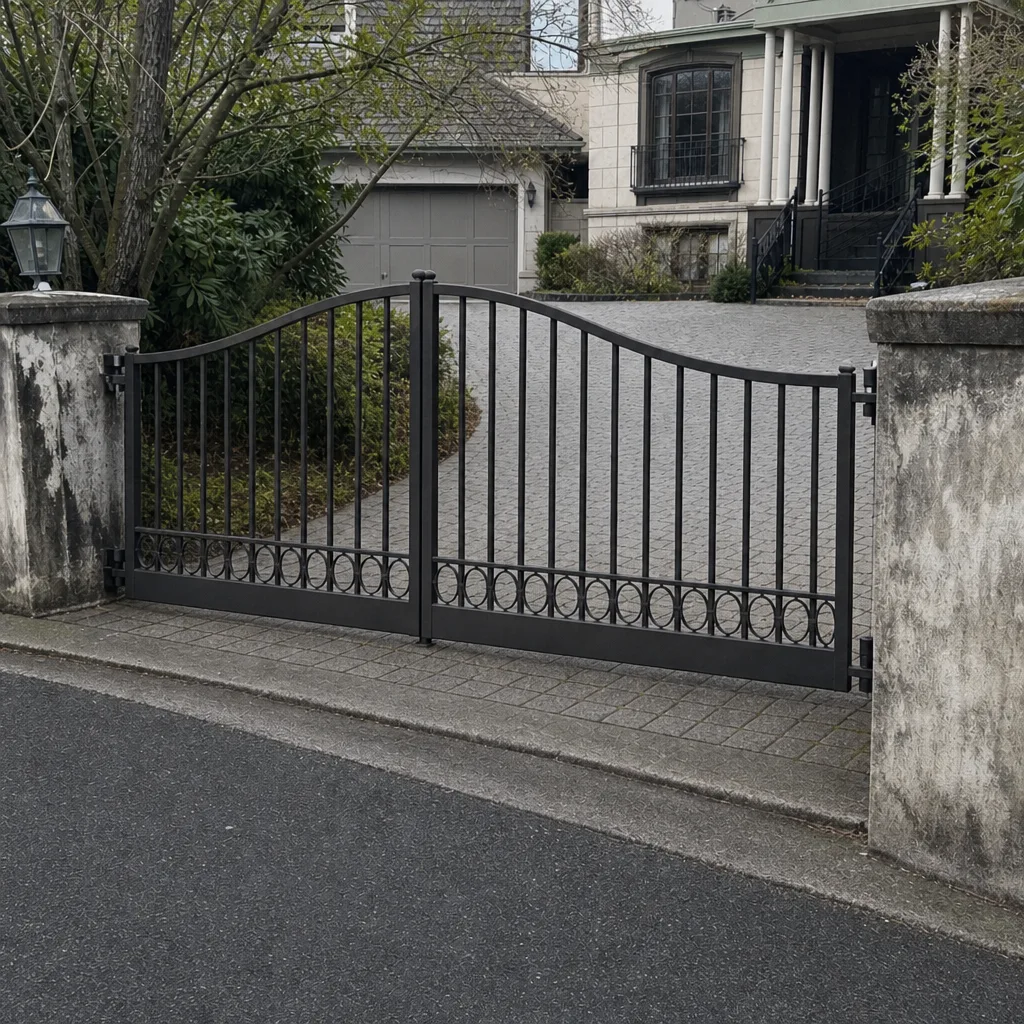
See the difference
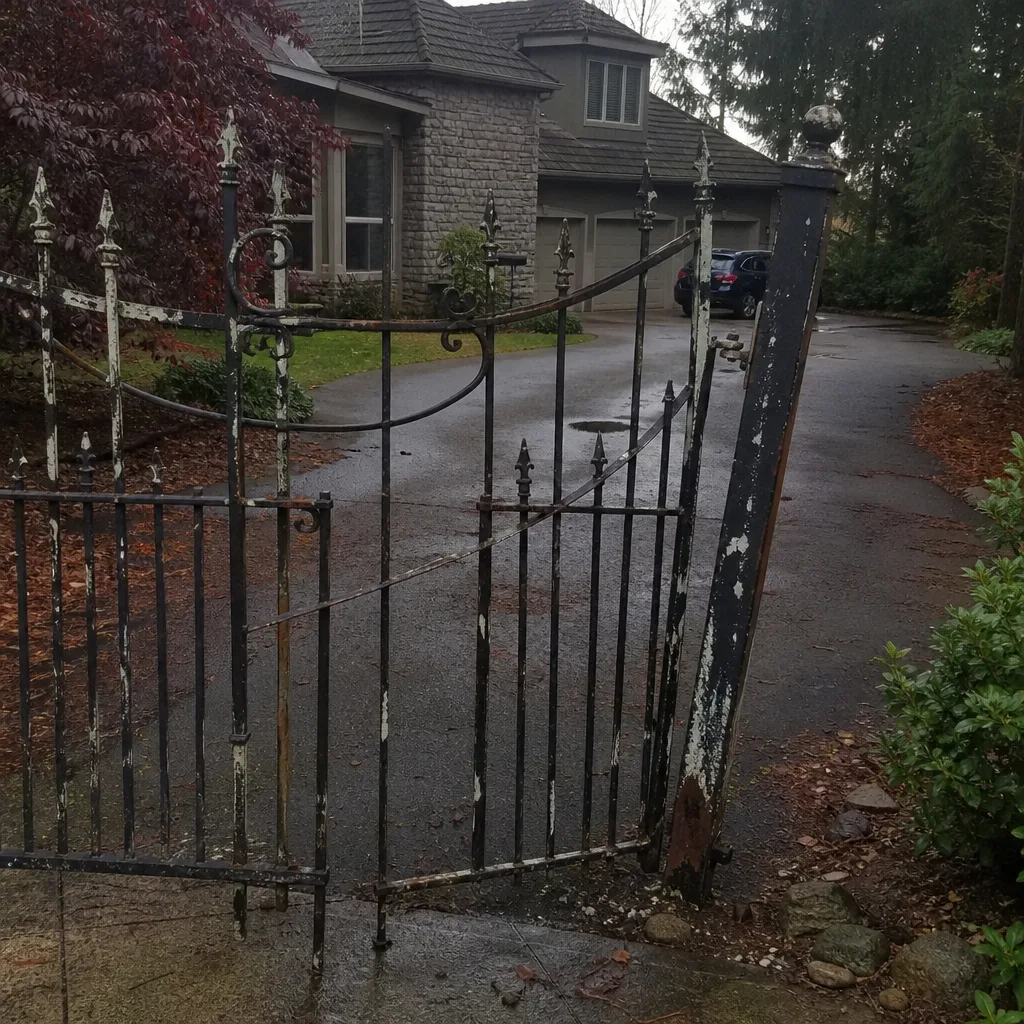 Before
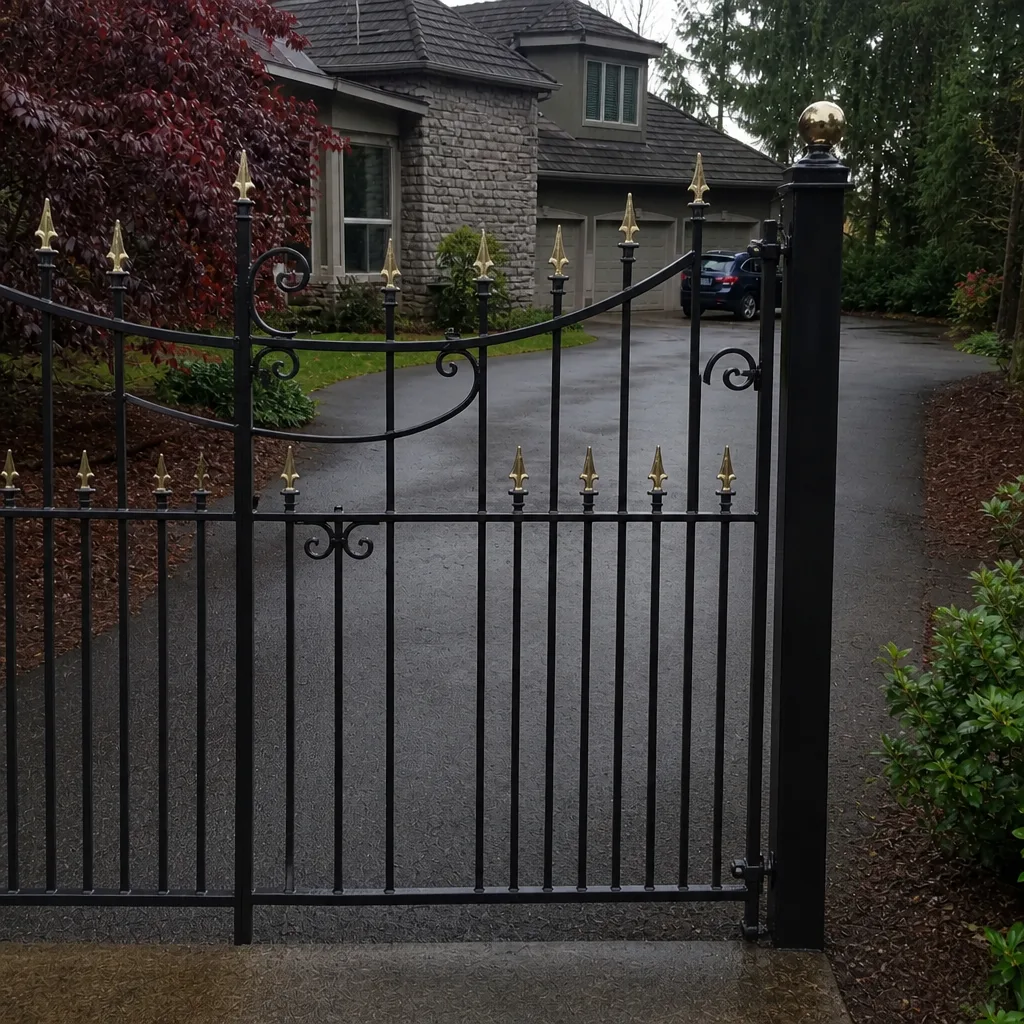 After
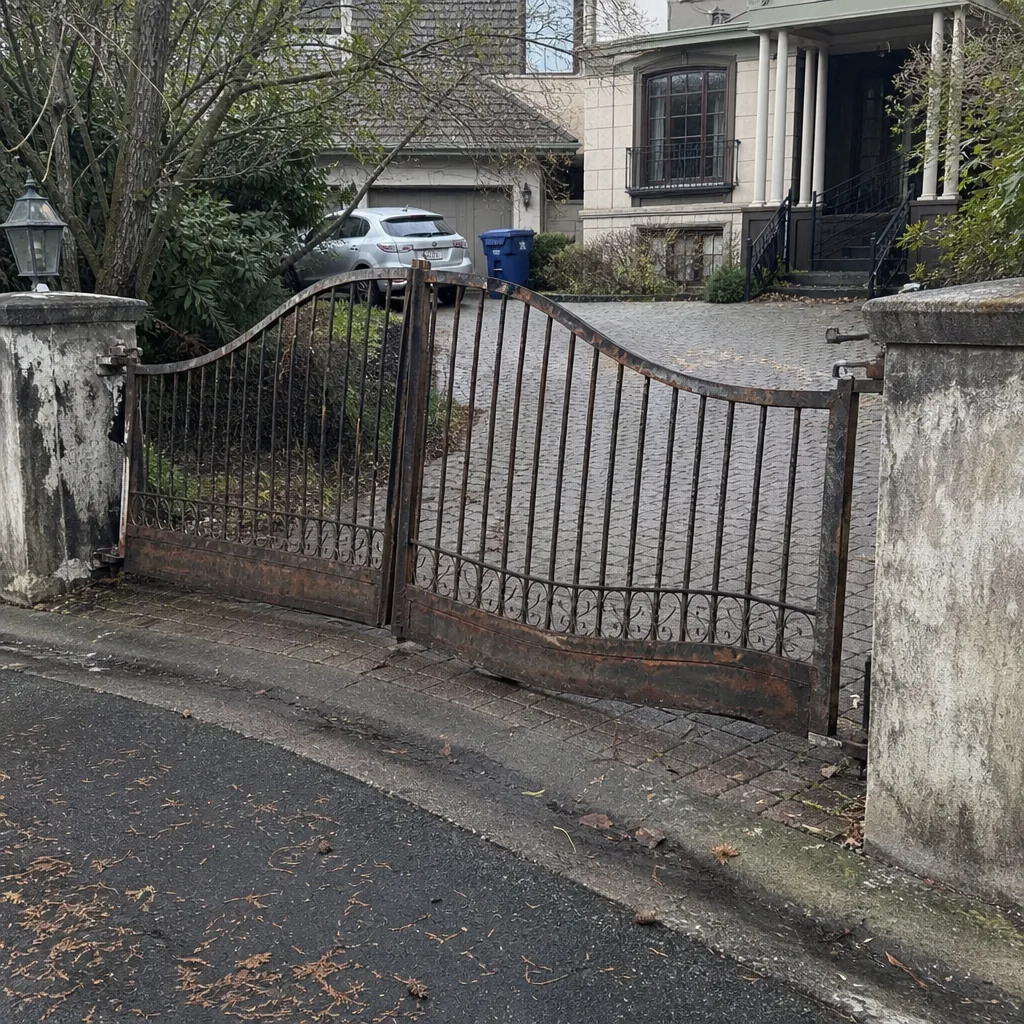 Before
 After
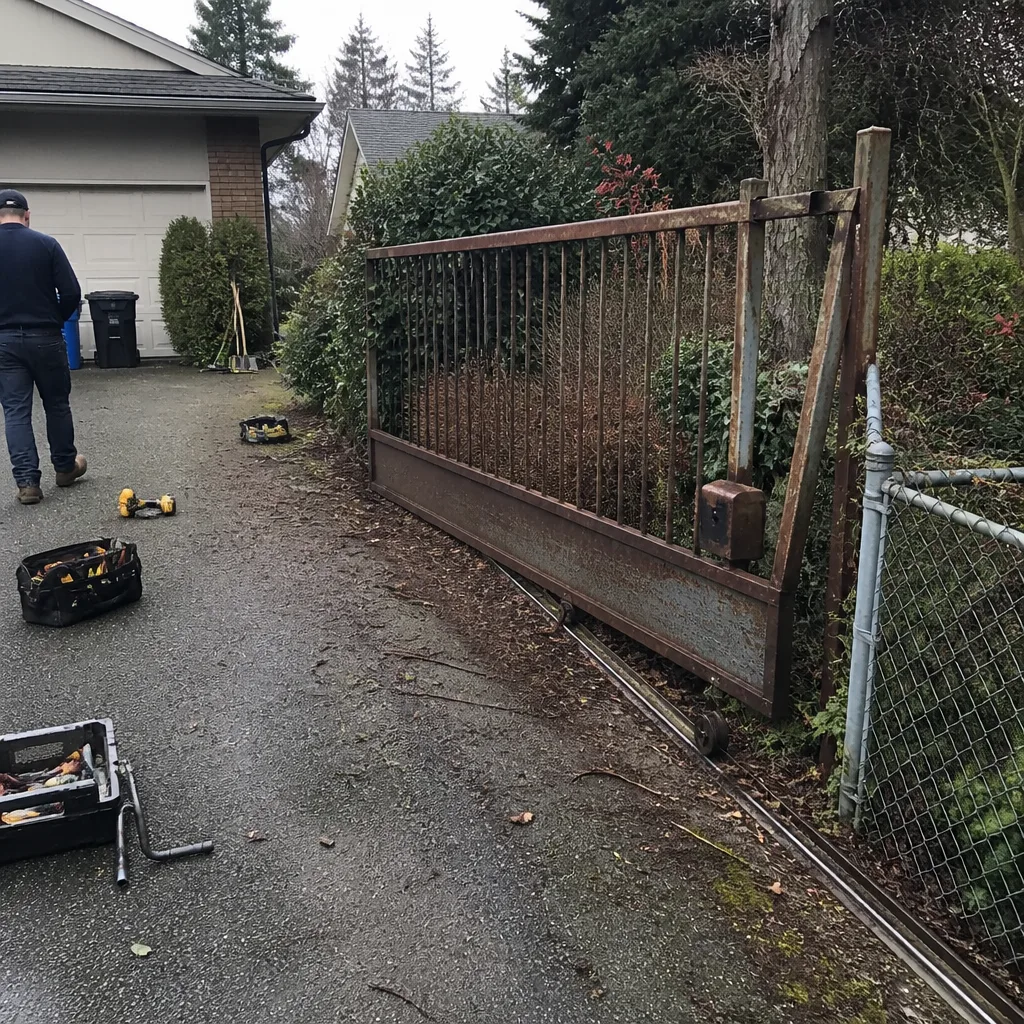 Before
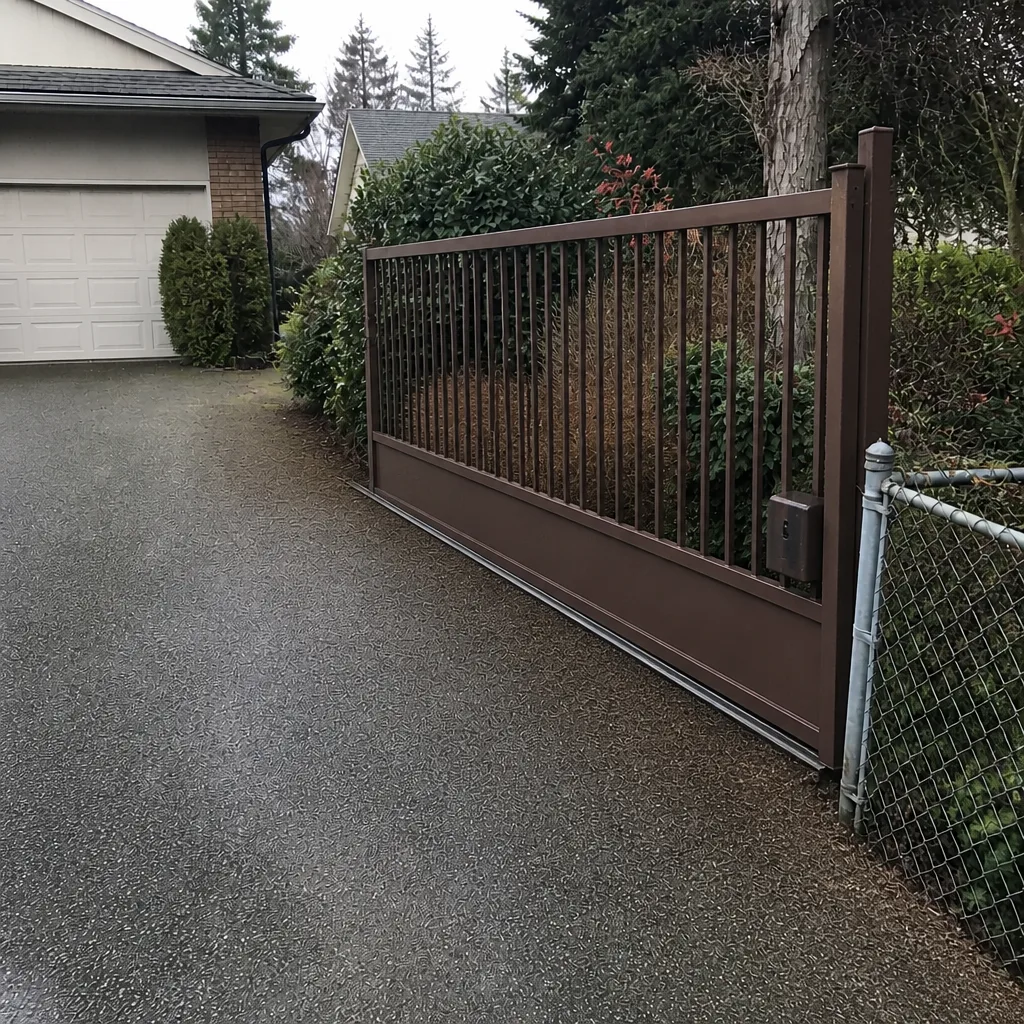 After
When to Call a Professional
Call a specialist when your gate stops moving, reverses unexpectedly, makes grinding or scraping sounds, drags or scrapes the ground, or shows signs of post movement, bent framing, or rust at a structural joint. Call immediately if a gate is stuck open, if you smell burning or see sparks near the operator, or if a gate has been hit by a vehicle or a fallen branch. For anything involving control boards, wiring, or high-voltage power, do not attempt a fix yourself. Gate operators run on high-voltage supply, and the moving panels can crush anyone in the wrong position. A trained technician has the tools and the safety knowledge to work on both the mechanical structure and the electrical system safely. Bellevue Gate Repair offers free estimates in Bellevue, and our technicians have up to experience. Call (855) 683-9015. We answer 24/7. Fast dispatch from 7am to 7pm, Sunday through Friday.
Frequently Asked Questions
Gate repair is priced per job by a written estimate, because the cost depends on whether the problem is an adjustment, a structural fix, or an electrical repair. A moving gate that needs a limit adjustment is a very different job from a post reset or a control board diagnosis. The estimate is free, and the price is quoted and agreed before any work starts, so there are no surprises on the invoice. Call (855) 683-9015 for an exact quote. Estimates are free.
Same-day service is often possible for repair and diagnostic calls, and we dispatch from 7am to 7pm, Sunday through Friday. Call (855) 683-9015 to tell us what your gate is doing, and we’ll book the next opening. We answer 24/7, and a call outside dispatch hours is booked into the next opening. If your gate is stuck open overnight, don’t force it by hand. Call it in and we’ll get you scheduled.
A dragging gate in Bellevue is usually a sign of post shift from clay soil, not a failing operator. The wet-and-dry cycle of the local clay can move a post enough to rack the frame out of square, so the gate no longer travels freely. The fix is resetting the post and re-squaring the frame, not turning limit switches. Call (855) 683-9015 for an exact quote. Estimates are free.
We repair both. Electric and automated gate repair is a specialty in its own right, covering control boards, limit switches, photo-eyes, loop detectors, and intercom and access control. Because we diagnose both the mechanical gate and its electrical components in a single visit, you’re not passed between vendors. Call (855) 683-9015 to describe the symptom. We answer 24/7.
We work on LiftMaster, FAAC, BFT, Linear, Viking, Ghost Controls, DoorKing, Elite, and Mighty Mule, along with other systems. Familiarity with a brand’s specific failure modes matters, because a DoorKing access-control fault and a Linear transmitter fault point to different things. We diagnose the actual problem rather than defaulting to replacement. Call (855) 683-9015 for an exact quote. Estimates are free.
Many rusty wrought iron gates can be repaired by cutting out the compromised section, welding in a replacement, and recoating the span. The exception is structural loss that’s spread across the whole gate, which is where replacement can make more sense. A specialist assesses the joints, not just the visible rust. Call (855) 683-9015 to schedule a free estimate in Bellevue.
The Bottom Line
Gate failures in Bellevue follow patterns. Clay soil moves posts and racks frames, wet winters aggravate hardware wear and wrought iron corrosion, and specific operator brands fail in specific ways. The mistake that costs the most is treating a structural problem as an electrical one, or the reverse. Learn to triage your gate by observing what it does, note the fault codes and the geometry, and describe the symptoms accurately when you call. That’s what turns a repeat breakdown into a repair that holds. Whether you need an adjustment, an electric gate repair diagnosis, or a new installation, we diagnose the gate and its operator together, and the price is agreed before work begins.
Ready to get a specialist on-site? Call Bellevue Gate Repair at (855) 683-9015 for a free estimate. We answer 24/7. Fast dispatch from 7am to 7pm, Sunday through Friday.
Written by the team at Bellevue Gate Repair.