
Last updated November 15, 2026
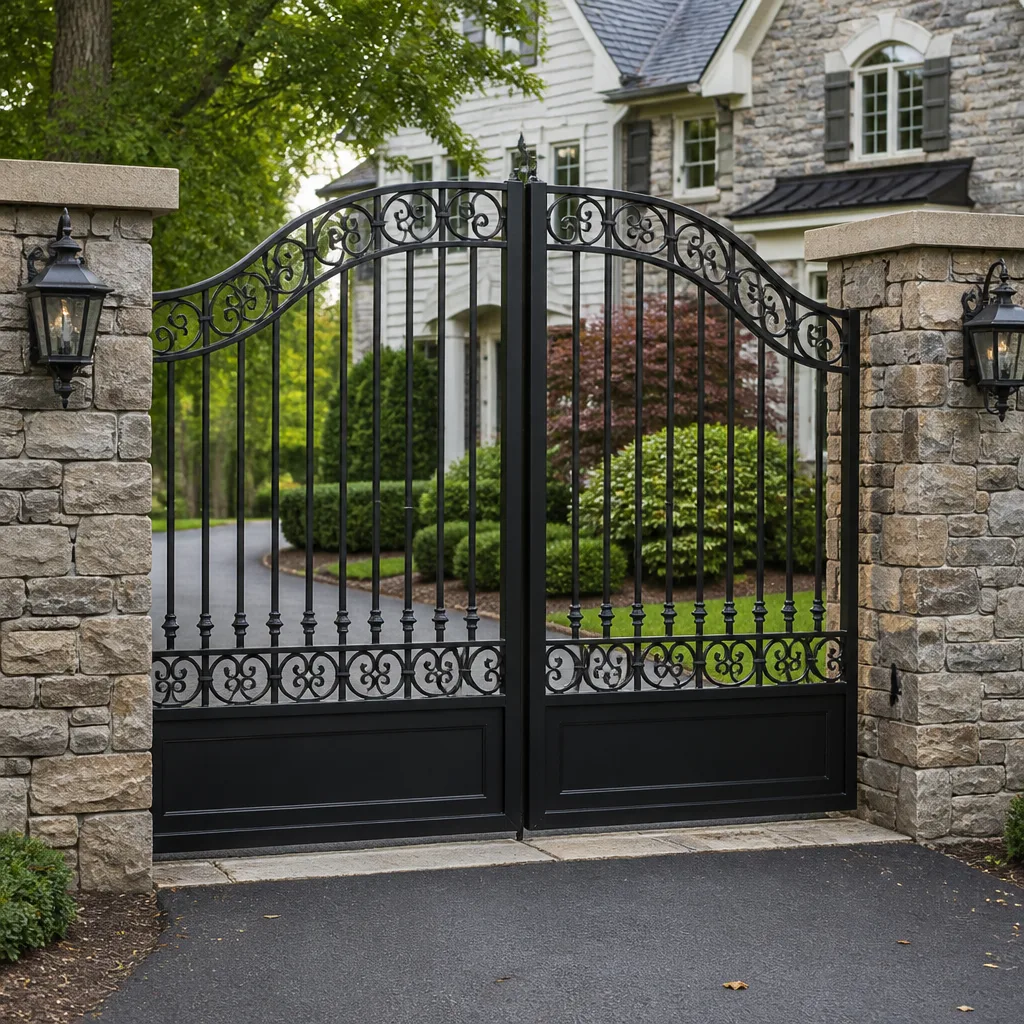 Wrought iron
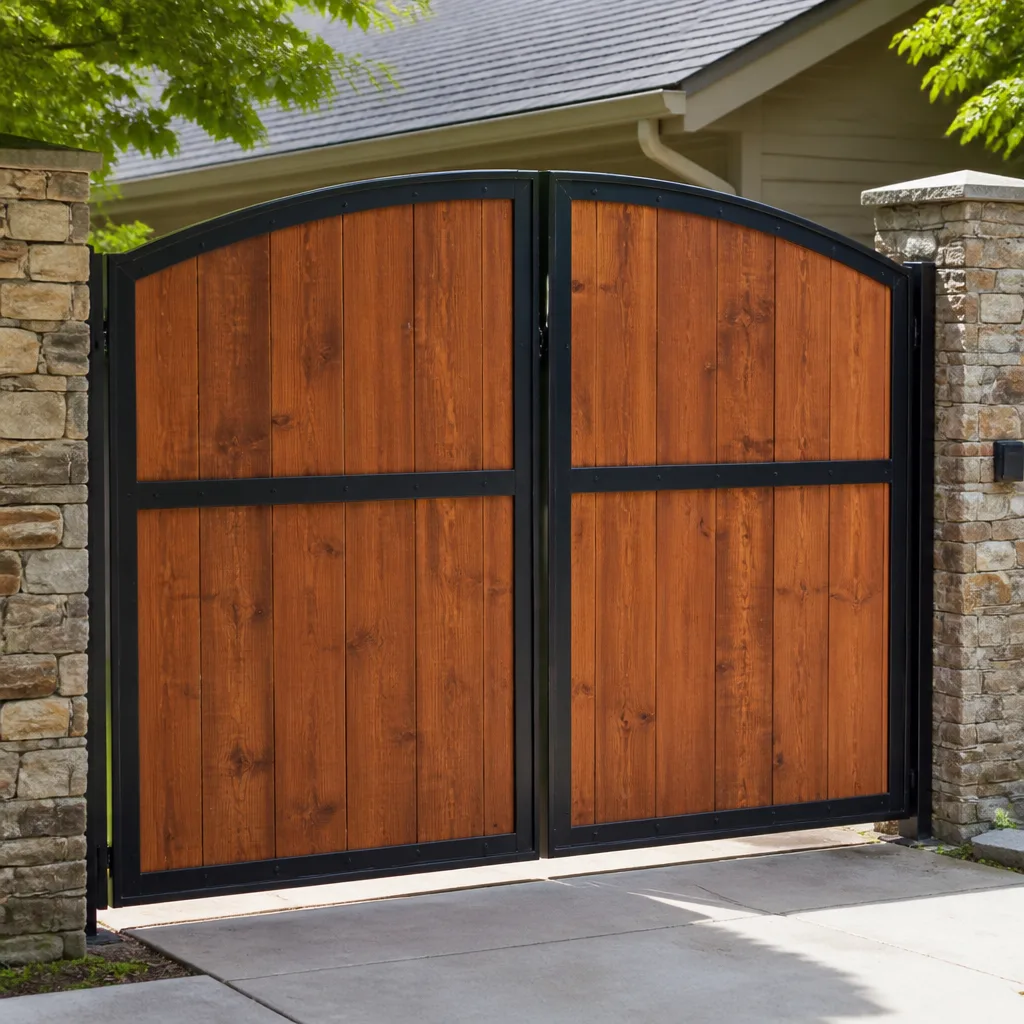 Wood & steel frame
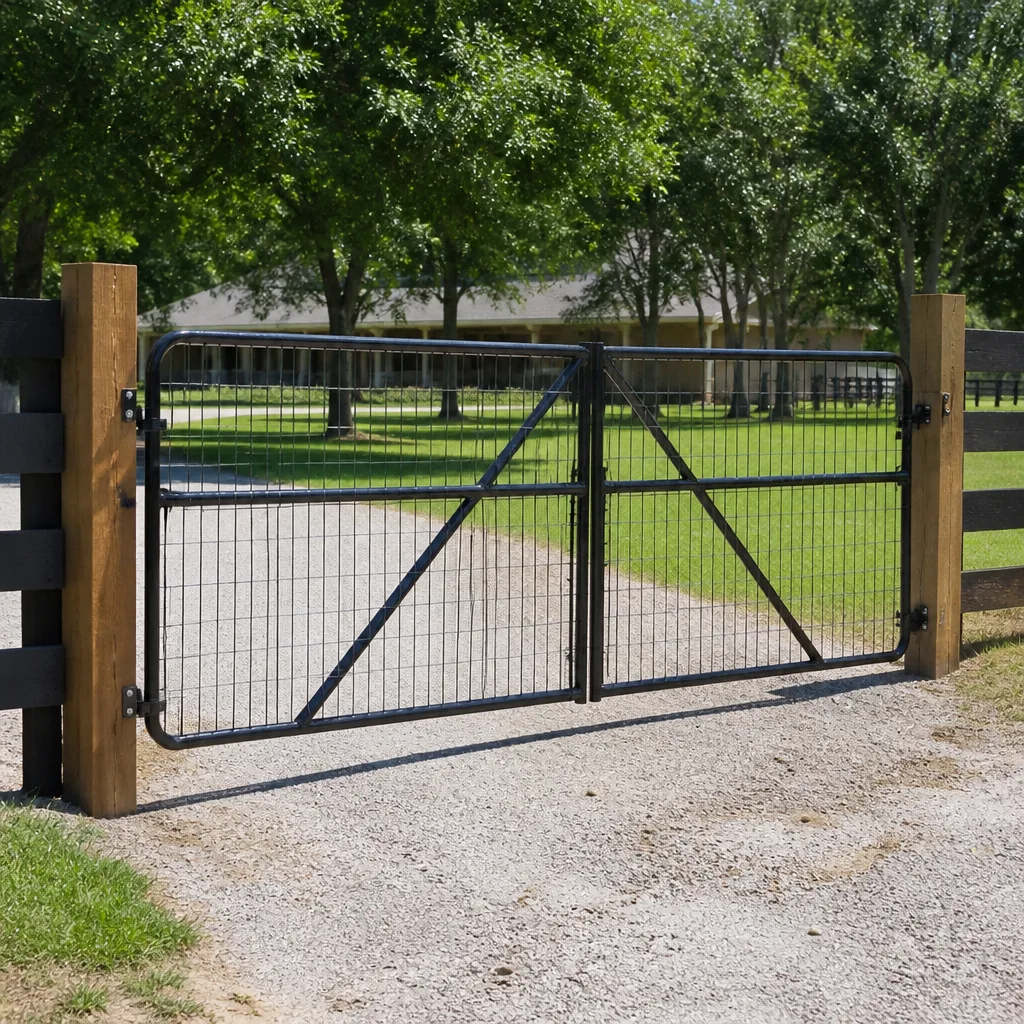 Farm & ranch
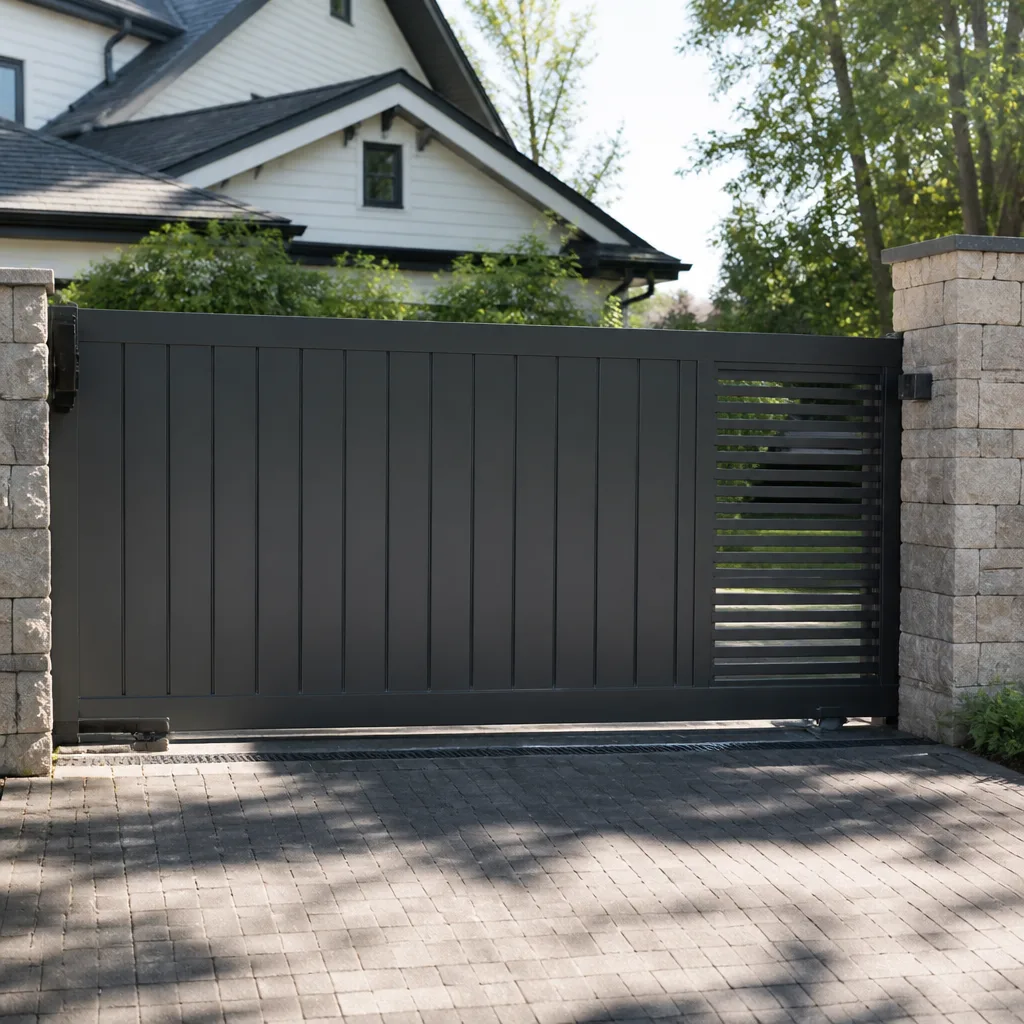 Sliding driveway gates
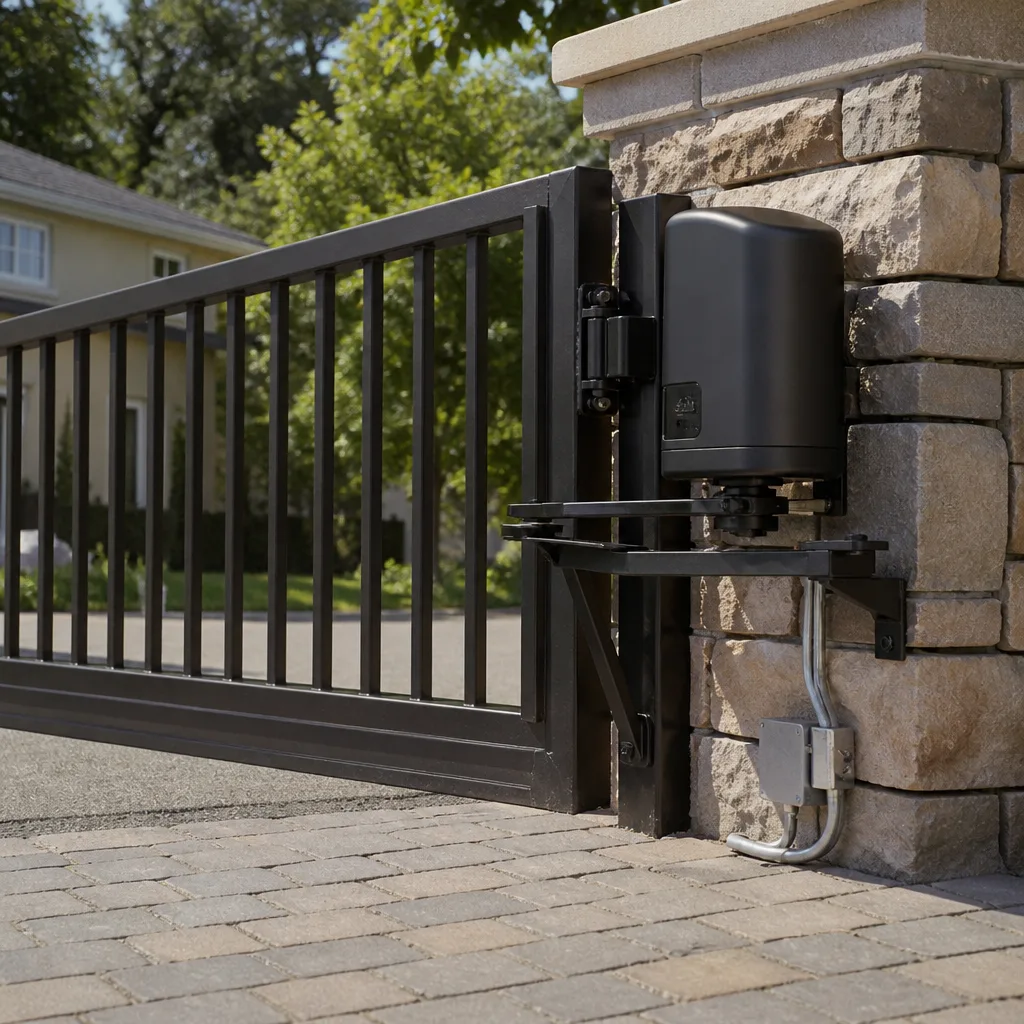 LiftMaster operators
Free on-site gate assessment - hinges, posts, and your LiftMaster or Nice gate operator checked before anything is quoted
The assessment is free and the quote is the invoice.
Get your free estimateGate Repair Troubleshooting in Bellevue: Common Problems and How to Fix Them
If your gate reverses before it fully opens, that’s not a motor problem. It’s almost always a miscalibrated limit switch or an obstruction the safety loop is reading as a person standing in the way. Replacing the motor won’t fix it, and we’ve watched homeowners spend on a new operator only to find the old one worked fine all along. Most gate failures trace back to one of three systems: the operator, the hinge and track hardware, or the sensing and safety loop. Figure out which one is failing and you’ll know whether you’re reaching for a wrench, a manual, or a phone. This guide walks you through that sequence for Bellevue gates that act up in our wet winters.
Quick Answer
Gate troubleshooting starts with isolating the failure to one of three systems: the operator (motor, control board, power), the mechanical hardware (hinges, rollers, arms, track), or the safety circuit (photoelectric sensors, loop detectors, limit switches). Manual gates that bind are a hardware problem. Automated gates that reverse, stall mid-travel, or flash an error code are almost always operator or safety-loop problems. If the gate moves freely by hand but won’t respond to controls, the fault is in the operator or wiring. If it grinds, drags, or hangs on one side, inspect the hardware before touching any settings.
Styles & brands we work with
- Wrought iron
- Wood & steel frame
- Farm & ranch
- Sliding driveway gates
- LiftMaster operators
Table of Contents
- Operator Failure vs. Hardware Failure: Diagnose Before You Adjust
- Decoding Flashing LED Codes on Common Operators
- Why Bellevue’s Wet Winters Cause Specific Gate Problems
- Three Things You Can Safely Adjust Yourself
- Five Adjustments That Require a Trained Technician
- How to Document Symptoms Before You Call
- Seasonal Gate Problems by Bellevue Neighborhood
- Repair or Replace: When Each Makes Sense
Operator Failure vs. Hardware Failure: Diagnose Before You Adjust
Before you touch a single setting or dial on your operator, run one test: put the gate in manual release and move it by hand. This one check splits every gate problem into two halves and it takes about thirty seconds. A gate that glides with light pressure across its full travel has good hardware. A gate that resists, scrapes, hangs at one point, or drops on the free end has a hardware problem that no amount of operator tuning will solve.
Release procedures vary by system. Most LiftMaster and Elite slide operators have a manual release lever or chain hoist. Swing operators from those brands usually have a keyed release on the arm or a manual-release key on the operator housing. If your operator is a Mighty Mule, check the manual for the release pin location, because forcing the gate without releasing it can damage the gearbox. If you don’t know the release procedure, stop there and call a technician.
What Each Failure Looks Like
- Hardware failure signals: gate sags on the hinge side, scrapes the ground at the latch end, wheels or rollers squeal, gate doesn’t sit level, visible rust or wood swelling at post brackets, cracked weld at a hinge plate, sagging cantilever arm.
- Operator failure signals: gate moves cleanly by hand but won’t respond to the remote or keypad, operator hums without moving the gate, gate opens partway and stops at the same spot every time, error lights flash, gate reverses immediately after starting.
- Safety-loop failure signals: gate reverses only when something passes in front of the sensors, gate reverses at random times, gate won’t close after dark, gate reverses whenever it rains (loop detector drift).
If you’re seeing mixed signals, that’s common on older gates in Bellevue. A swollen wood post can shift the gate enough that a limit switch reads wrong. In that case, hardware and operator problems overlap and a technician needs to look at both systems together. That’s why a specialist should be able to diagnose both the mechanical gate structure and its automation in one visit, not send you to two different trades for the same problem.
Before You Suspect the Motor
Motors rarely fail outright. What fails more often is the control board, the limit switch, the safety sensor alignment, or a corroded connector somewhere along the low-voltage wiring run. Replacing an entire operator when the actual fault is a bad control board or a misaligned safety beam is the single most expensive mistake we see on gate calls. Diagnose the actual problem first; replace only what’s failed.
Decoding Flashing LED Codes on Common Operators
Most modern gate operators use an LED status light on the control board or housing to report faults. The exact blink pattern varies by brand and model, so treat the general meanings below as a starting guide, then cross-check against your operator’s manual for the specific code. Still, the broad patterns are consistent across the brands we see most in Bellevue: LiftMaster, FAAC, Elite, DoorKing, and Mighty Mule.
Common Blink Patterns and What They Usually Mean
- Gate reverses and the operator LED flashes rapidly after the reversal: safety-loop fault. Either the photoelectric safety beam is blocked or misaligned, or the loop detector is dropping its signal. Clean the lenses and check that nothing (a shrub, a parked car, a gate leaf) is in the beam path.
- LED flashes on power-up but the gate never responds to controls: low-voltage input fault or loss of the safety edge signal. Often a loose connector in the access-control wiring run or a damaged safety-edge strip on the gate leaf.
- Operator runs briefly, stops at the same spot, LED flashes twice (or the pattern in your manual): limit-switch fault or obstruction fault. The operator thinks it hit something or reached a limit that doesn’t match the actual gate position.
- LED solid or dark, no response at all: power or control-board fault. Verify the breaker and confirm the operator is actually receiving line voltage before assuming the board is dead.
- Fast continuous flash: on many operators this indicates the operator is in a maintenance or “learning” mode and needs a reset or travel recalibration.
What to Do with a Code
- Write down the exact blink pattern, the timing (for example, two flashes, pause, two flashes).
- Note the brand and model printed on a sticker on the operator housing or inside the control-box cover.
- Compare against the operator’s manual first; it’s the authoritative source for your exact model.
- If the code points at a safety device, clear obstructions and re-test before assuming anything is broken.
- If the code persists with the beam clear and the gate traveling freely by hand, call a technician. That combination usually points at the control board or the safety wiring, and the fix is inside the operator.
DoorKing and LiftMaster access-control systems in Bellevue commercial installs are especially prone to code faults after power interruptions during the storm season, because the operator loses its travel calibration and needs a re-learn. That’s a technician visit, not a homeowner fix. Call (855) 683-9015 for an exact quote – estimates are free.
Why Bellevue’s Wet Winters Cause Specific Gate Problems
Bellevue’s climate does specific damage that dry-climate troubleshooting guides miss entirely. Winters here are wet for months, not just rainy for a week, so water and damp air have time to work their way into every mechanical joint and electrical connector on your gate system. That’s why so many gate problems in Bellevue that seem to “just happen” arrive between November and March.
The Three Failures Bellevue Winters Cause
- Swollen wood posts. Wood gate posts absorb groundwater through the winter and swell. The swelling shifts the gate’s hinge alignment by a fraction of an inch, which is enough to make the gate drag at the latch, stress the operator arm, and confuse limit switches. By March, a gate that ran clean in October is dragging and stalling. The post isn’t damaged; it’s swollen. It may recover in summer, but the damage to the hinge and operator during the wet months is real.
- Loop detector drift. Loop detectors sense a metal vehicle by measuring an electromagnetic field, and wet pavement changes the ground’s conductivity around the loop. In Bellevue’s wet winter, that can make the detector’s sensitivity drift until it false-triggers, delays, or refuses to release. The gate reverses at random times; sometimes it opens when nothing is there. Re-tuning the detector or resealing the loop cuts solve most of these.
- Corroded low-voltage connectors. Safety beams, keypads, intercoms, and loop wiring all run on low voltage, and every outdoor junction is a place for water to sit. A single corroded twist-on connector can take an entire safety circuit down, and the symptom (gate reverses randomly) looks exactly like an operator fault. Repacking junctions, greasing contacts, and replacing crimped connectors is the fix.
What to Check After a Bellevue Rain Spell
After a stretch of wet weather, walk the gate line and check for dirt-buildup under rollers, water pooling at the base of posts, and debris in the track channel. On swing gates, look at the hinge bolts for rust blooms that indicate water penetration. On slide gates, look at the guide track for grit. If your driveway drains toward the gate, that’s a perennial problem in parts of Bellevue where the grade runs down toward the street. Correct drainage around the gate base prevents the repeat failures.
Three Things You Can Safely Adjust Yourself
There’s a short list of adjustments most homeowners can safely make without touching the operator’s electrical components or the gate’s structural hardware. We walk Bellevue homeowners through these on the phone all the time because they save a service call. Beyond this list, call a technician.
1. Clear the Safety Beam Path
Photoelectric safety beams (the small paired sensors usually mounted on either side of the gate opener) trigger more false failures than any other single component. Walk down the line between the two sensors. Remove anything stuck in the beam – a fallen branch, a landscaping stone, a leaning plant. Then wipe the sensor lenses with a clean cloth. On LiftMaster and Elite systems, a dirty lens is enough to make the receiver lose alignment and reverse the gate every time it closes. Cleaning and re-aiming takes minutes and costs nothing.
2. Reset the Operator’s Travel Limits to Default
Most operators have a reset or relearn procedure you can run from the control panel. This clears dead travel limits, resets obstructions, and lets the operator re-measure the gate’s actual travel. On LiftMaster and DoorKing systems, the procedure typically involves holding a specific button for a set time, then running the gate through a full open-close cycle. On Mighty Mule and FAAC operators, check the manual for the relearn sequence. Do this only with the gate clear of obstructions and nothing in the way of the swing.
3. Lubricate the External Moving Parts
Hinges, roller chains, swing arms, and gate wheels all benefit from routine lubrication with a silicone spray or manufacturer-recommended grease. Skip the WD-40 for hinges (it’s a solvent, not a lubricant). Bring a rag, clean the joint first, then apply. In Bellevue’s wet winters, lubricating twice a year – say October and March – prevents rust from seizing the moving parts. Do not lubricate limit switches, control boards, or the inside of the operator housing.
What NOT to Adjust Yourself
Do not touch the operator’s line voltage, the safety-edge strip wiring, the loop-detector control unit, or the gate’s structural bolts. Do not adjust the force or reverse sensitivity beyond what the manual allows; on modern operators those settings determine how hard the gate closes and getting them wrong can cause serious injury to a person or vehicle. Do not attempt to move limit switches inside the operator housing – that’s a technician adjustment and it takes a meter and experience.
Five Adjustments That Require a Trained Technician
These are the five most common repairs we make on Bellevue gates – all high-complexity work that a generalist handyman can’t safely or effectively handle. Our technicians have up to experience with operators, control boards, and safety circuits, and they carry the diagnostic range across the nine brands we work on. Here’s what’s actually involved in each.
- Control board diagnosis and replacement. The control board is the operator’s brain, and a bad board can mimic any other fault – safety sensors, limit switches, obstruction codes, power faults. Diagnosing it properly requires a multimeter, the operator’s wiring diagram, and experience with that specific brand. Replacing the wrong board is expensive and unnecessary.
- Limit-switch recalibration. Limit switches tell the operator where the gate is fully open and fully closed. On LiftMaster and FAAC operators they’re adjusted mechanically inside the operator housing; on DoorKing systems they may be software-set through the control panel. Getting them right takes timing, a test cycle, and an understanding of how your gate’s geometry interacts with the switch position.
- Loop detector tuning and replacement. Loop detectors drift in wet weather, and the tuning procedure is a precise adjustment. A technician checks the loop’s physical condition, tests the wire resistance, and re-tunes the sensitivity. If the loop is physically damaged (common under driveways that crack or settle), it needs to be re-sawn and rewired.
- Safety-edge and photoelectric wiring repair. When the safety circuit fails, the fault is usually in a connector or wiring run. Finding it takes tracing the circuit and testing each junction. Our electric gate repair work on Bellevue gates often starts with a safety-circuit trace, because that’s where the failure usually lives.
- Battery backup and power supply repair. Many automated gates run on battery backup or low-voltage solar at Bellevue homes where line power to a remote post is impractical. Battery health, charger systems, and solar regulators all need professional diagnosis when the gate starts failing during the backup cycle.
How to Document Symptoms Before You Call
The single biggest thing you can do to speed up a gate repair is to record what your gate is actually doing before we arrive. When a Bellevue homeowner calls us with a specific symptom record, the visit is shorter and the diagnosis is faster. When the details are missing, we spend the first half of the visit recreating what you already saw. Here’s the documentation approach that works.
What to Capture Before the Call
- Video of the failure. A 30-second clip of the gate failing to open, failing to close, or reversing mid-cycle is worth more than five minutes of description. Capture it from two angles if you can: one showing the full gate travel, one showing the operator LED.
- The exact LED blink pattern. Note whether the light flashes once, twice, three times, or continuously. Note the pause between flash groups. This is the fault code, and it points us directly at a subsystem.
- Timing. When did the gate open? When did it reverse? A gate that reverses at 4 seconds after starting is a different fault than one that reverses at 12 seconds. Count.
- Trigger method. Does the failure happen when opening from the remote, from the keypad, from opening the safety loop (a car waiting at the sensor), or randomly? Each trigger type gives us a diagnostic path.
- Recent weather or events. A power outage, a heavy rain, a landscaping truck through the gate, or a “we replaced the batteries last month” note all narrow the search.
- Operator model and installation details. The brand and model printed on the operator housing, plus a photo of the control board, gets us parts research moving before we arrive.
Text or email us the video and photos when you call. That’s how a repair visit gets to twenty minutes instead of ninety. Call (855) 683-9015 – we answer 24/7. Fast dispatch from 7am to 7pm, Sunday through Friday. Send the video along and we’ll have the likely diagnosis started before we reach your driveway.
Seasonal Gate Problems by Bellevue Neighborhood
Bellevue covers a lot of ground, and gate failure patterns cluster by the kind of property and the kind of weather exposure each area gets. Here’s what we typically see where.
West Bellevue and the Lake Washington Edge
Homes in the West Bellevue neighborhoods around Medina, Clyde Hill, and Meydenbauer see more tree cover and heavier canopy moisture, which means more debris in safety beams, more moss growth on gate tracks, and more low-voltage connector corrosion from wet leaf litter. Slope-side driveways in these areas often drain across the gate line, so post swelling and loop detector drift are common. LiftMaster and FAAC swing operators dominate this market.
East Bellevue and Crossroads
Detached homes and duplexes in Crossroads, Lake Hills, and Eastgate often run entry gates along planted borders where shrub roots spread under the loop detector. Root growth distorts the loop field and causes false triggers. Wood-post gates in these neighborhoods need annual post inspection because the soil stays damp. Elite and Mighty Mule operators are the most common on residential properties here.
Downtown Bellevue and Commercial Corridors
Commercial and multi-family gate systems downtown run harder – higher cycle counts, more access-control integration, and more elaborate loop and intercom systems. DoorKing entry systems and post-mount intercoms on multi-family gate drives see more frequent control-board faults and more elaborate wiring issues. Loop detector drift is the number one Bellevue downtown gate call. We work on residential, multi-family, and commercial gate systems, and commercial access-control work is where the diagnostic edge matters most.
Factoria and the South Bellevue Corridors
Factoria and the neighborhoods approaching Issaquah see more wooded-lot properties with heavier driveway grades. Fence-line gates on these lots often run longer slide gates on cantilever arms, and cantilever sag is the recurring problem. Track and roller wear, not operator failure, is what fails first.
If you’re not sure which category your property falls into, our guide to gate repair covers the broader service overview, and you can always call us with the neighborhood and we’ll tell you what to check first.
Repair or Replace: When Each Makes Sense
Most gate problems are repairs, not replacements. Here’s how we think about which path makes sense – the same logic our technicians use on-site.
- Repair almost always: single component failures (limit switch, sensor, control board, safety edge, rollers, hinge plate), gate that works mechanically but fails intermittently, operator that responds to controls but misbehaves, any failure under five years old on a quality operator. These are the calls that make sense for a specialist, because we can identify the exact failed part without replacing broad components.
- Repair usually: post swelling that hasn’t yet caused permanent gate-frame damage, loop detector that’s physically in good condition but mis-tuned, low-voltage wiring that’s corroded but not yet broken.
- Repair or replace depends: operators over 12-15 years old that have multiple failing subsystems. If the control board, limit switches, and motor are all at end of life simultaneously, a new operator often costs about the same as three sequential repairs and gives you a fresh warranty.
- Replace: structurally failed gate frame (bent, cracked, or splitting), rusted-through operator housing, gate hardware that’s been repaired once and is failing again in the same spot, system that no longer matches the current safety code requirements for your access-control setup.
If you’re weighing repair vs. replacement, get a free estimate first. Our Bellevue Gate Repair team diagnoses the actual problem before recommending a path, so you know what you’re choosing between. Call (855) 683-9015 for an exact quote – estimates are free.
Common Mistakes to Avoid
- Replacing the operator before diagnosing the actual fault. A “bad motor” is almost never a bad motor. It’s usually a bad control board, safety sensor, or limit switch. Replacing the whole operator when a $150 board was the issue is what we see most often, and it’s the most expensive mistake on the list. Diagnose first.
- Ignoring a swollen wood post through the winter. The gate drags, the operator strains, and by spring the hinge plate has warped and the operator arm is bent. Bellevue’s wet season exaggerates every misalignment, so what reads as a “minor drag” in January is a hinge repair in April. Check post and hinge alignment after any cold, wet stretch.
- Tuning the operator’s force or reverse sensitivity to be “stronger.” That setting exists to protect whoever is standing in the gate’s path. Raising it makes the gate close harder on a person or a car, and getting it wrong isn’t a repair problem that shows up later – it’s a safety problem the moment it closes. Leave it at factory or let a technician adjust it precisely.
- Skipping the manual-release test before calling. If the gate moves by hand, we know it’s the operator. If it doesn’t, we know it’s the hardware. Two very different calls. Skipping that test wastes the first fifteen minutes of a service visit and often leads homeowners to the wrong specialist.
- Assuming a code you found online matches your operator. Blink codes vary by brand and model. A DoorKing code doesn’t mean the same as a LiftMaster code, and Mighty Mule has its own scheme. Check the manual for your exact model before acting on what a search tells you.
- Ignoring loop-detector drift in wet weather. A gate that reverses randomly in the rain is almost always a loop detector losing tuning. Leaving it alone doesn’t fix it – the detector keeps drifting through the wet season and wastes more cycles on the operator. Get it tuned once and most of this disappears.
- DIY electrical work inside the operator housing. Line voltage, capacitor discharges, and battery backup systems can be genuinely dangerous. The gate hardware and safety sensors are fair game for homeowner maintenance. Anything inside the operator housing is not.
- Calling a general handyman for an operator problem. A handyman who does gates as a side service will fix the visible symptom and miss the underlying fault. Automated gate repair is a specialty. Get someone whose day job is gate systems.
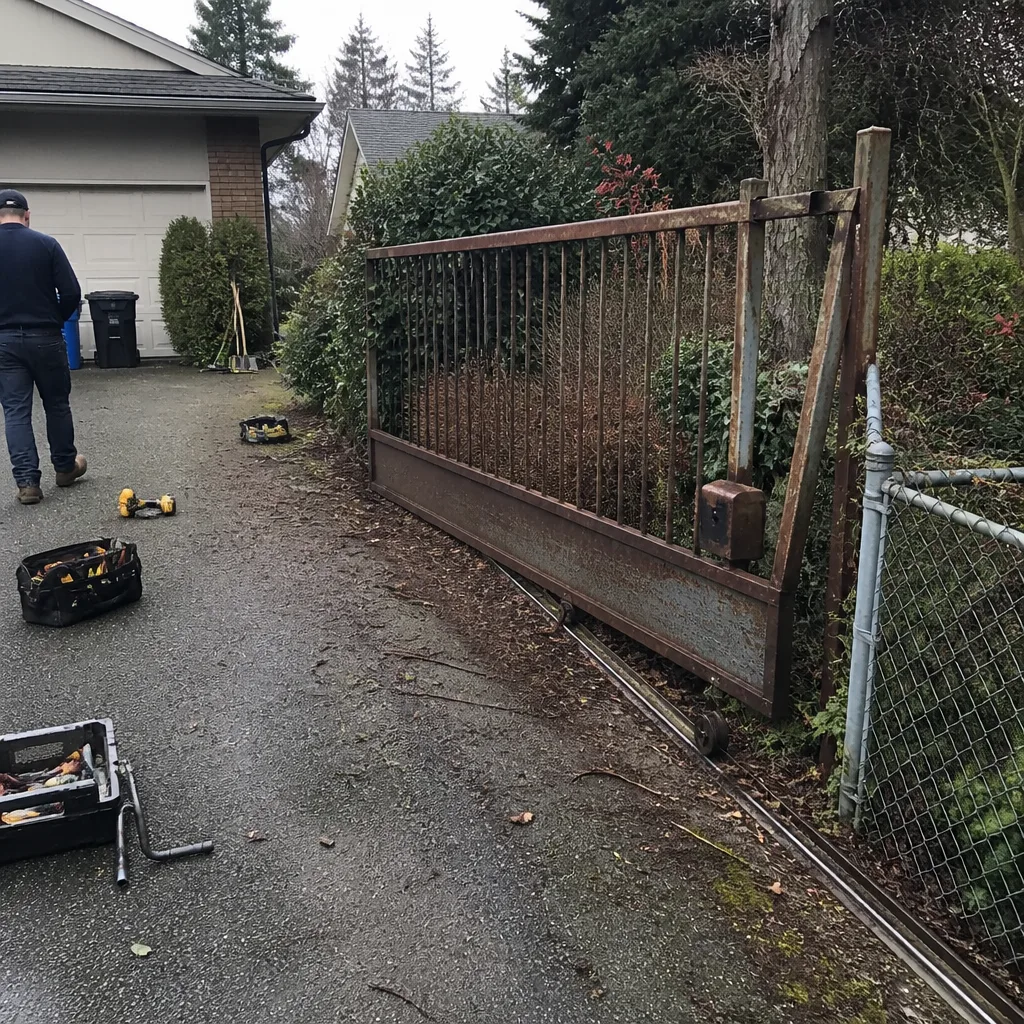
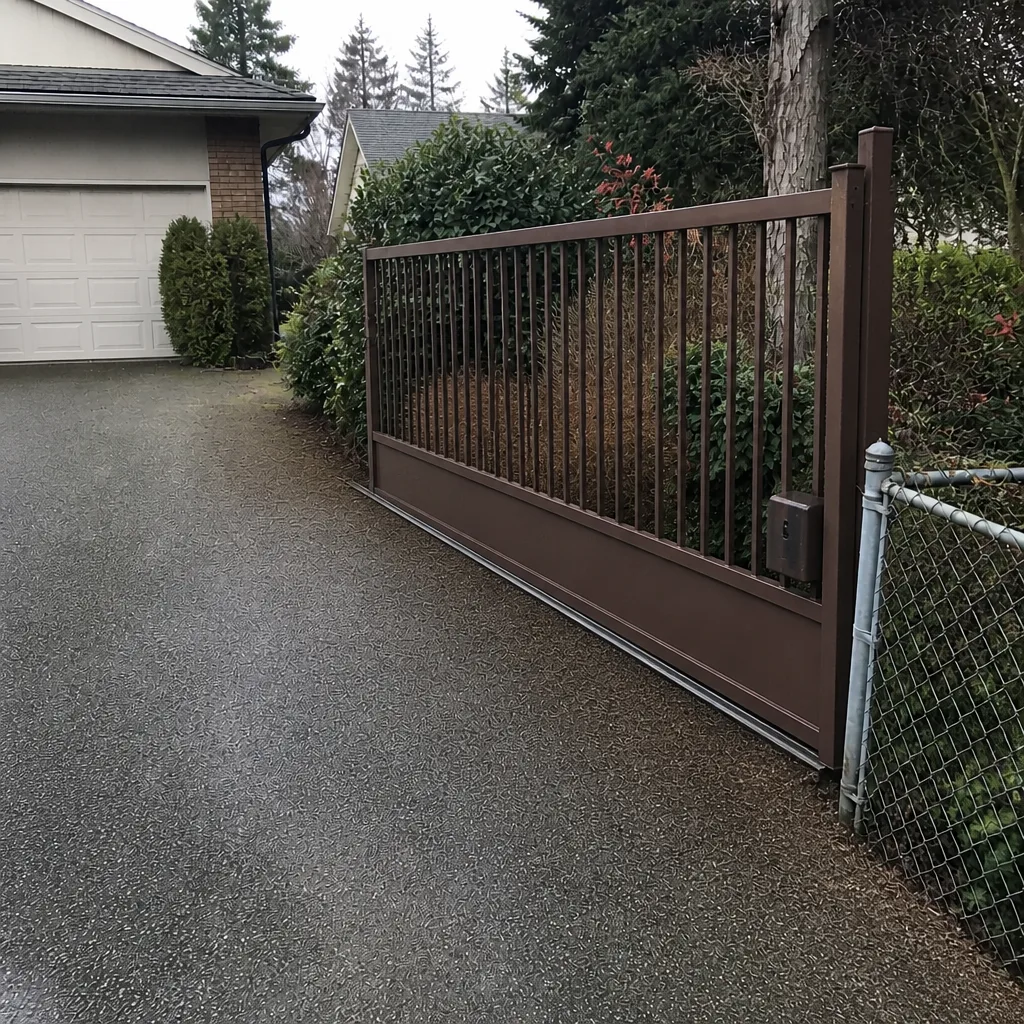
See the difference
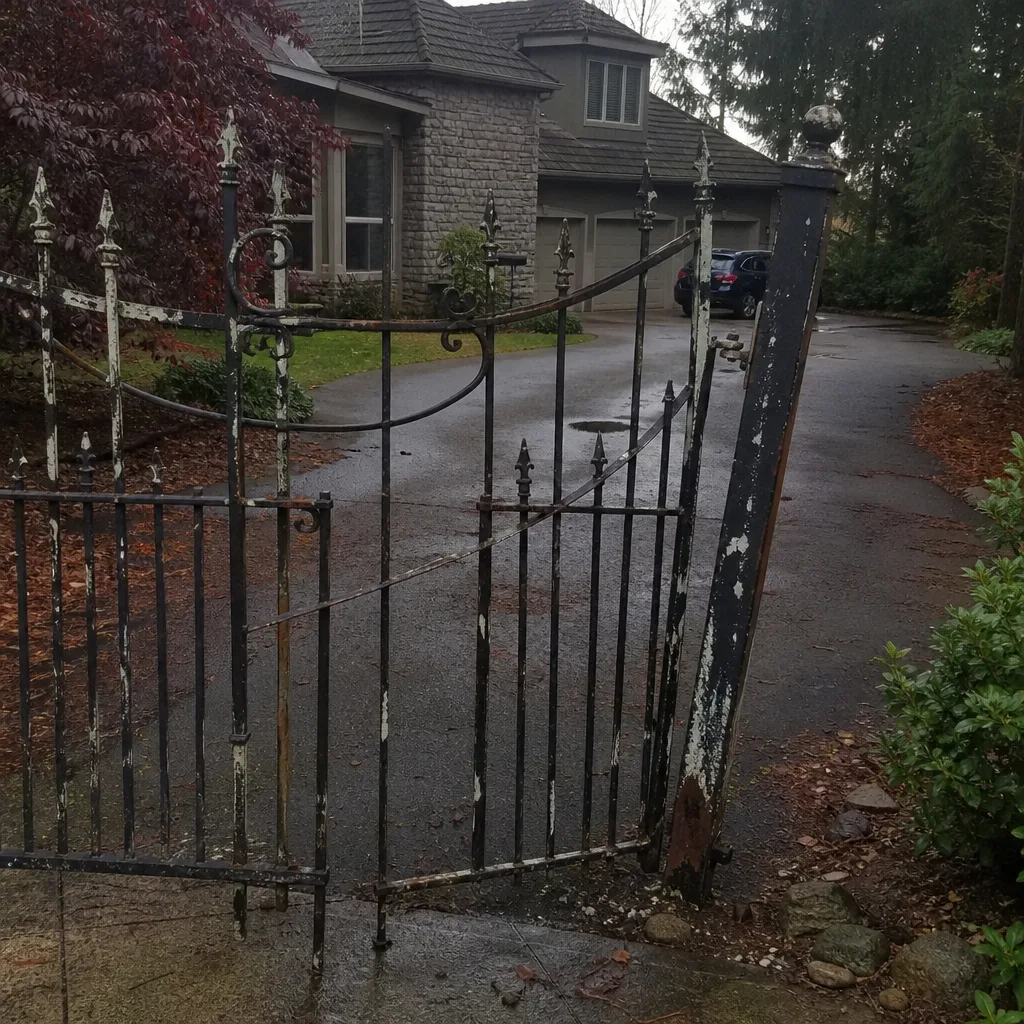 Before
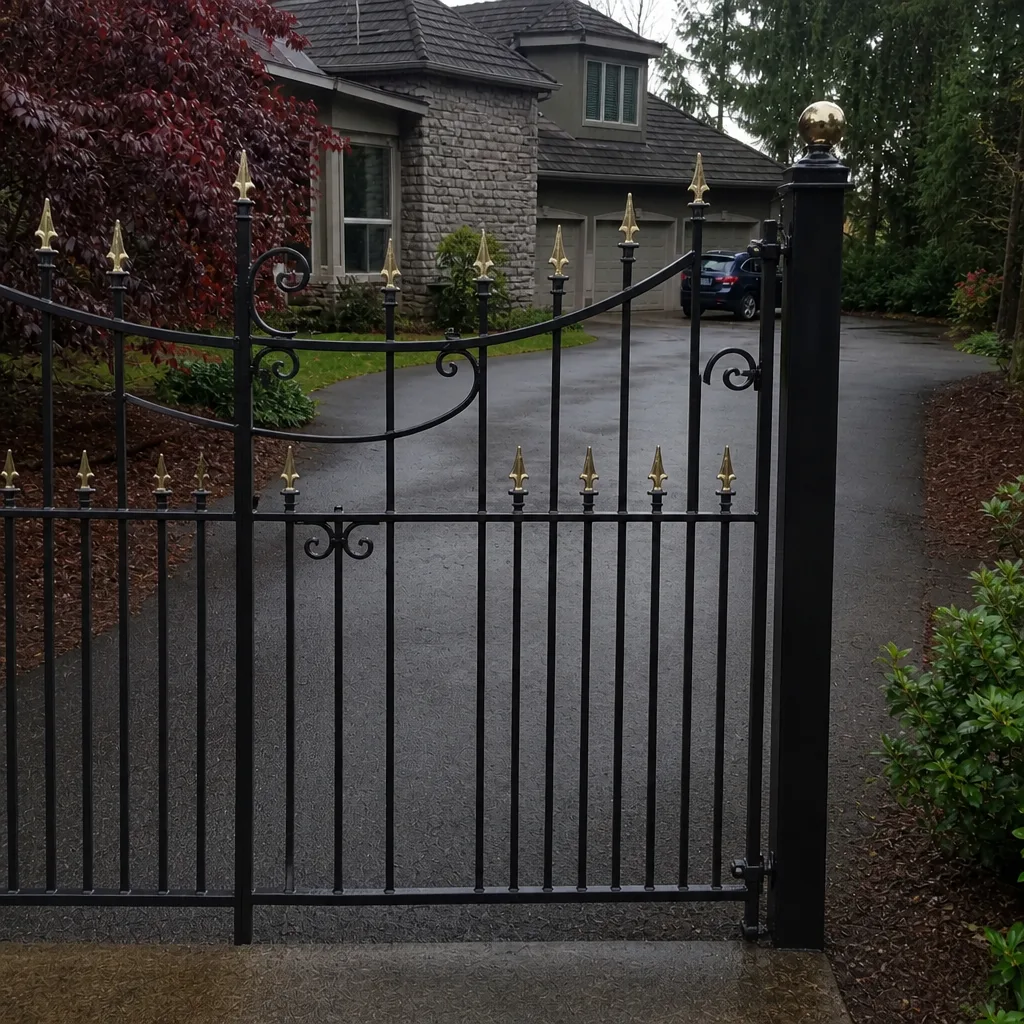 After
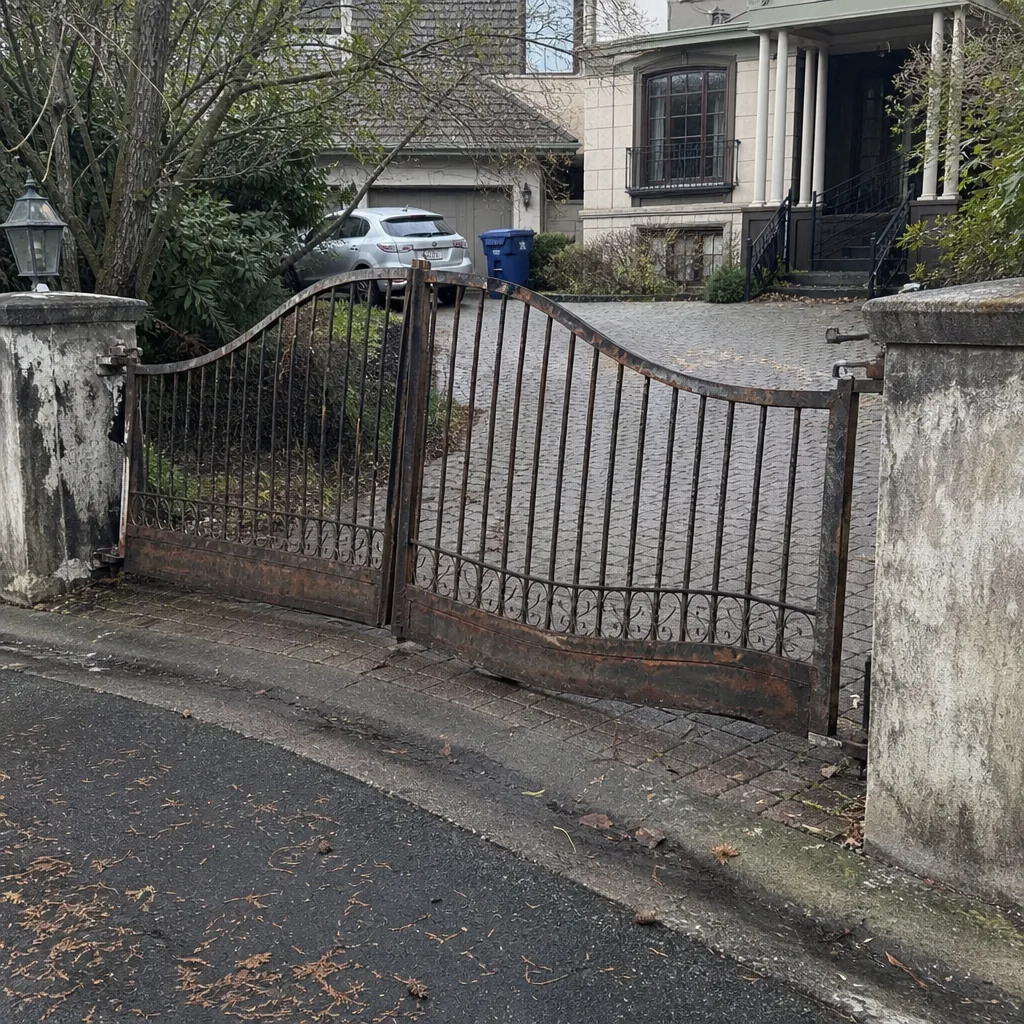 Before
 After
 Before
 After
When to Call a Professional
Call a gate specialist when any of these are true. The gate won’t move at all, and you’ve confirmed it isn’t a tripped breaker. The gate reverses or stops mid-travel and the safety beam path is clear and clean. The operator flashes an error code after a reset. Anything inside the operator housing looks or smells scorched. The gate is visibly misaligned, sagging, or dragging on one side after a hardware check. The safety edge or loop detector is failing, or a car or person has actually been hit by the gate. On commercial and multi-family sites in Bellevue, call us when the access-control system fails at a gate that gets heavy daily use, because the diagnostic cost of guessing wrong on a DoorKing or LiftMaster commercial controller is much higher than the corrective visit. Bellevue Gate Repair offers free estimates in Bellevue – call (855) 683-9015. We answer 24/7, with fast dispatch from 7am to 7pm, Sunday through Friday.
We’re fluent in the brands you’ll actually find on Bellevue gates – LiftMaster, FAAC, BFT, Linear, Viking, Ghost Controls, DoorKing, Elite, and Mighty Mule – and we work on the full range of automated and manual gate systems across Bellevue. Whether your operator is a LiftMaster or a Mighty Mule, we carry the parts and know the system.
Frequently Asked Questions
A reversing gate is almost always a safety sensor problem, not a motor problem. The photoelectric beam is either blocked, misaligned, or the receiver is faulting. Clean both sensor lenses, verify the beam path is clear, and re-test. If the reversing continues with the beam clear, the safety-edge wiring or loop detector is the likely fault – call (855) 683-9015 for an exact quote, estimates are free.
The blink pattern is a fault code. Rapid flashing after a reversal usually means a safety-loop fault; a pair of flashes at the same point in travel usually means a limit switch or obstruction fault; a solid or dark LED with no response usually means a power or control-board fault. Exact codes vary by brand, so check the operator manual for your model, then call if the code persists with the beam clear.
Yes, to a point. You can safely clear sensor obstructions, reset the operator to factory travel limits, and lubricate external moving parts. If those don’t fix it, stop there. Anything involving line voltage, control boards, limit switches inside the operator, or the safety-edge wiring needs a trained technician – those parts can cause serious injury if handled wrong.
Gate repair in Bellevue is quoted per job after we look at the system, so there’s no single flat rate. Small component repairs (sensor cleaning, connector repair) sit at the low end; control-board replacement, loop detector repair, and full operator work sit higher. Your written estimate sets the final price and we confirm it with you before any work starts. Call (855) 683-9015 for an exact quote – estimates are free.
Yes, usually. Random gate activation at night in Bellevue is often loop detector drift caused by wet ground changing the detector’s sensitivity. The gate “sees” a phantom vehicle. Re-tuning the detector or resealing a cracked loop will fix it. Occasionally it’s a short in the low-voltage wiring that only manifests when moisture is present.
Call a gate specialist for anything automated. A handyman can replace a hinge or tighten a latch, but automated gate repair involves control boards, loop detectors, safety circuits, and access-control integration that generalists routinely turn down. A gate specialist diagnoses the actual problem instead of replacing broad components. That’s all we do – automated gate repair is its own specialty.
Yes. Our technicians are equipped to diagnose both the mechanical gate structure and its automation in a single visit, so you don’t have to schedule two separate trades. That’s one of the practical differences between a specialist and a generalist for a gate that’s failing on both sides at once.
Repair almost always makes sense for single component failures on a structurally sound gate. Replacement starts to make sense when the gate frame is structurally compromised, or when an older operator has multiple failing subsystems at once. Get a free estimate first so you’re choosing with real data instead of guessing.
The Bottom Line
Most gate problems are diagnosable, and the diagnosis is the repair. The manual-release test tells you whether the fault is the operator or the hardware. The LED blink pattern tells you which subsystem inside the operator. The wet-season weather pattern in Bellevue amplifies every existing weakness – swollen posts, drifting loop detectors, corroded connectors – and diagnosing those specific failure modes is what separates a fast repair from a series of expensive guesses. Three things you can safely do yourself: clear the safety beam, reset the operator limits, lubricate the moving parts. Everything else belongs with a technician who works on gates every day. If your gate is misbehaving, call (855) 683-9015 for a free estimate.
Written by the team at Bellevue Gate Repair.